
 Product Catalog
29.05.25
Batteries are a source of energy that can also become a source of danger. Without proper handling, they turn from a useful resource into an environmental and technical threat — one that we can control, if we know how.

Why can batteries be dangerous?
Chemical and technical risks
Batteries are complex chemical systems that, if mishandled, may pose serious threats. The most common issues are thermal runaway, short circuits, and electrolyte leakage. In lithium-ion models widely used in FPV, EW and ELINT systems, these risks are particularly relevant.
For example, if the casing is damaged, uncontrolled heating may occur, leading to fire. Electrolyte leakage can cause corrosion, skin irritation, or environmental pollution. That is why understanding these risks and handling batteries responsibly is essential.
How to handle batteries safely
Basic rules:
- Store batteries in a dry, cool place, away from heat sources.
- Do not puncture, disassemble, or throw them.
- Use a Battery Management System (BMS) to monitor charge, temperature, and cell balance.
- Follow the manufacturer’s instructions regarding charging, storage, and disposal.
Industrial systems
In industrial battery packs — such as backup power systems or electric transport — regular diagnostics, temperature monitoring, and proper cell balancing are crucial. This is not just a technical requirement, but a guarantee of operational safety.
How to dispose of batteries
Household and industrial waste
Household batteries should be placed in designated collection bins, usually located in electronics stores, supermarkets, or recycling centers. Large batteries — such as those used in electric vehicles or energy systems — require specialized disposal. They are disassembled, chemical components neutralized, and then recycled.
Recycling technologies
- Hydrometallurgy — leaching metals from electrodes.
- Pyrometallurgy — high-temperature smelting to extract valuable components.
- Direct recycling — preserving active materials for reuse without destroying their structure.
These methods help return resources to the production cycle and reduce environmental impact.
Environmental consequences of improper handling
Impact on the environment
Improper handling of batteries can lead to soil, water, and air pollution. Heavy metals — such as cadmium, lead, and nickel — accumulate in ecosystems, causing toxic effects. Organic solvents and fluorinated compounds have long-term impacts on the environment.
Quantitative examples
A single 200 g lithium-ion battery may contain up to 30 g of metals. If released into the environment, it can contaminate up to 400 liters of water. This is a real threat that highlights the need for responsible handling.
What regulations govern disposal
Ukrainian legislation
In Ukraine, the “Law on Waste” and Cabinet Resolution №1120 regulate the handling of hazardous waste. These documents set requirements for the collection, transportation, processing, and disposal of batteries.
International standards
- EU WEEE Directive (Waste Electrical and Electronic Equipment)
- ISO 14001 — Environmental management
These documents form the foundation of responsible handling of electronic components at a global level.
What each of us can do
Each of us can contribute to safe battery handling: bringing used cells to specialized collection points, choosing products with recycling labels, and supporting brands that implement reuse programs. All of this is not just the right thing to do, but part of a culture of responsible consumption.
A battery is not just a source of energy but also a source of responsibility. Proper handling is a contribution to a safer future, where technology works for good rather than harm.
News and Reviews


01/09/2026
Top News for the Morning of September 1, 2026. Russia is using tactics of attrition against Kyiv
BTRY.ENERGY offers news and articles in Ukrainian with a focus on preserving Ukrainian identity, citizens' rights, and t...
31/08/2026
Pentagon: Arsenal to be expanded
BTRY.ENERGY offers news and articles in Ukrainian with a focus on preserving Ukrainian identity, citizens' rights, and t...

31/08/2026
Three major American publications focus on Ukraine. Why does this matter?
BTRY.ENERGY offers news and articles in Ukrainian with a focus on preserving Ukrainian identity, citizens' rights, and t...

31/08/2026
Top News for the Morning of August 31, 2026. The world has finally entered a global conflict
BTRY.ENERGY offers news and articles in Ukrainian with a focus on preserving Ukrainian identity, citizens' rights, and t...

28/08/2026
A new nuclear technology: micro-reactors. Why is this important?
BTRY.ENERGY offers news and articles in Ukrainian with a focus on preserving Ukrainian identity, citizens' rights, and t...
28/08/2026
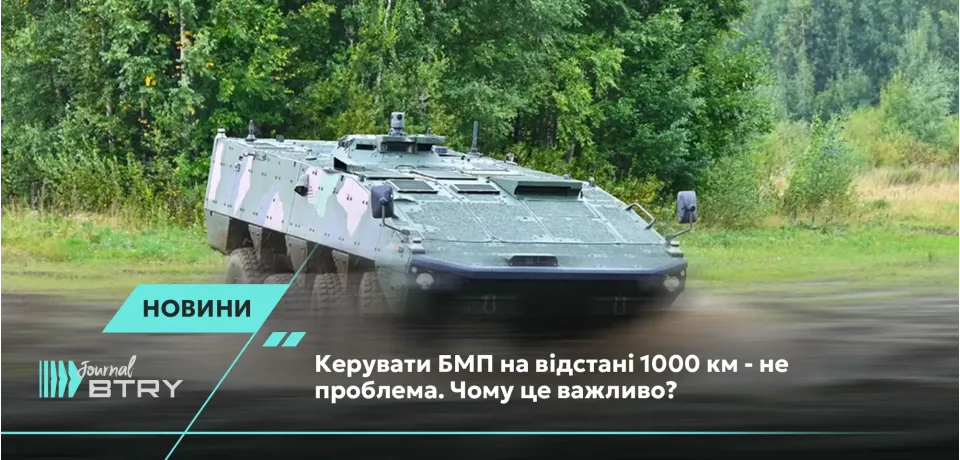
Operating an infantry fighting vehicle (IFV) from a distance of 1,000 km is not a problem. Why is this important?
BTRY.ENERGY offers news and articles in Ukrainian with a focus on preserving Ukrainian identity, citizens' rights, and t...
Consultation
Need more information?
Would you like to learn more about BTRY.ENERGY or get a personal consultation - fill out the form and we will contact you


