
 Product Catalog
18.03.26
Cylindrical batteries are the foundation of portable power sources and energy systems as a whole. In this article, we will examine their form factors, design features, and the key differences between the most popular standards

In the world of technology, there are things that remain almost unchanged for decades, yet are constantly improving. Cylindrical batteries are one of them. They quietly accompany us every day: in flashlights, laptops, power tools, and even electric vehicles.
Their simple and reliable shape has become a symbol of portable energy. However, behind this apparent simplicity lies complex engineering logic and strict standardization.
To begin with, let’s understand what a battery form factor actually is.
Form factor is a standardized size and shape of a battery that determines its compatibility with devices. In the case of cylindrical batteries, the designation usually consists of numbers that represent the diameter and length of the cell.
For example:
18650 means 18 mm in diameter and 65 mm in height
21700, in turn, means 21 mm in diameter and 70 mm in height
The last digit sometimes indicates the shape (0 — cylindrical).
Why a Cylindrical Shape?
The cylindrical shape has several key advantages:
- uniform distribution of internal pressure
- resistance to mechanical stress
- ease of manufacturing (winding electrodes into a roll)
Most Common Form Factors
18650
18650 is one of the most well-known and widely used formats. It is actively used in everyday devices such as:
- laptops
- power banks
- flashlights
- some electric vehicles
Advantages:
- balance between capacity and size
- well-established manufacturing technology
- wide range of available models
21700
21700 is a newer standard that is gradually replacing the 18650 format in many areas.
Its features:
- higher capacity (due to increased volume)
- better energy efficiency
- fewer cells required for the same battery pack
This format is used in modern electric vehicles and high-performance power tools.
Additionally, in the context of full-scale war and the transformation of combat into drone warfare, the 21700 form factor has found a new application. These cells are actively used in battery packs for powering various remotely operated systems.
We at BTRY.ENERGY are a leading Ukrainian manufacturer of such battery packs. Our ассортимент includes solutions for FPV drones, UGV, copters and UAV`s.
We also offer individual 21700 battery cells from global leaders such as Lishen, Molicel, and Samsung.
26650
26650 is an even larger format, with its main advantages being high capacity and the ability to handle high currents.
The disadvantages of this format are its size and, consequently, lower versatility.
Batteries (Standard Sizes)
AAAA, AA (R6), C, D are classic formats more commonly associated with household batteries, but they also exist in rechargeable versions (e.g., NiMH, Li-ion).
Technical Aspects of Selection
When choosing a form factor, it is important to consider not only the size but also the following parameters:
- Capacity (mAh) – determines how long the battery will operate
- Nominal voltage – typically 3.6–3.7 V for lithium-ion cells
- Maximum discharge current – a critical factor for high-power devices
- Thermal characteristics – larger cells dissipate heat more effectively
Development Trends
Modern manufacturers are moving towards:
- increasing energy density without significant growth in size
- improving heat dissipation
- transitioning to new form factors (e.g., 4680)
New standards make it possible to reduce the number of cells in battery packs and improve their overall efficiency.
At BTRY.ENERGY, we have our own R&D department and a top-tier engineering team, and we continuously evolve. Our specialists conduct research and constantly develop new prototypes to provide our customers with the latest advancements in the field.
For example, our product range also includes experimental batteries for EW/SIGINT systems.
To meet specific needs, we also manufacture custom battery packs. You can learn more about the conditions of such requests via the provided link.
In a world where energy is becoming increasingly mobile, these “small cylinders” remain key carriers of power that drive modern technology forward.
Cylindrical batteries are an example of how simple geometry can become the foundation for complex technological solutions.
The form factor determines not only physical dimensions but also efficiency, safety, and application areas of power cells. Understanding these parameters allows you to choose optimal solutions for both everyday devices and high-tech systems.
News and Reviews


01/09/2026
Top News for the Morning of September 1, 2026. Russia is using tactics of attrition against Kyiv
BTRY.ENERGY offers news and articles in Ukrainian with a focus on preserving Ukrainian identity, citizens' rights, and t...

31/08/2026
Pentagon: Arsenal to be expanded
BTRY.ENERGY offers news and articles in Ukrainian with a focus on preserving Ukrainian identity, citizens' rights, and t...

31/08/2026
Three major American publications focus on Ukraine. Why does this matter?
BTRY.ENERGY offers news and articles in Ukrainian with a focus on preserving Ukrainian identity, citizens' rights, and t...

31/08/2026
Top News for the Morning of August 31, 2026. The world has finally entered a global conflict
BTRY.ENERGY offers news and articles in Ukrainian with a focus on preserving Ukrainian identity, citizens' rights, and t...
28/08/2026
A new nuclear technology: micro-reactors. Why is this important?
BTRY.ENERGY offers news and articles in Ukrainian with a focus on preserving Ukrainian identity, citizens' rights, and t...
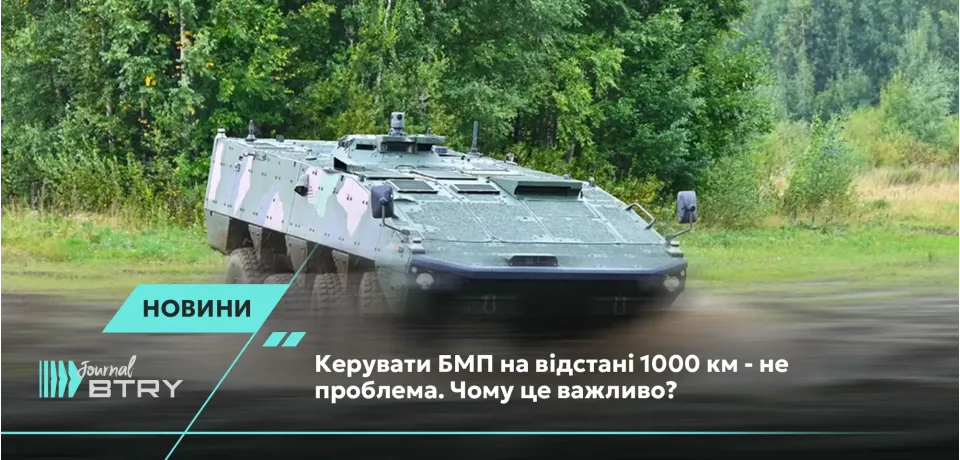
28/08/2026
Operating an infantry fighting vehicle (IFV) from a distance of 1,000 km is not a problem. Why is this important?
BTRY.ENERGY offers news and articles in Ukrainian with a focus on preserving Ukrainian identity, citizens' rights, and t...
Consultation
Need more information?
Would you like to learn more about BTRY.ENERGY or get a personal consultation - fill out the form and we will contact you


