
 Product Catalog
27.08.25
FPV drones have flooded the battlefield. Every day these birds fly and perform combat missions. But what are they made of, what materials and components?
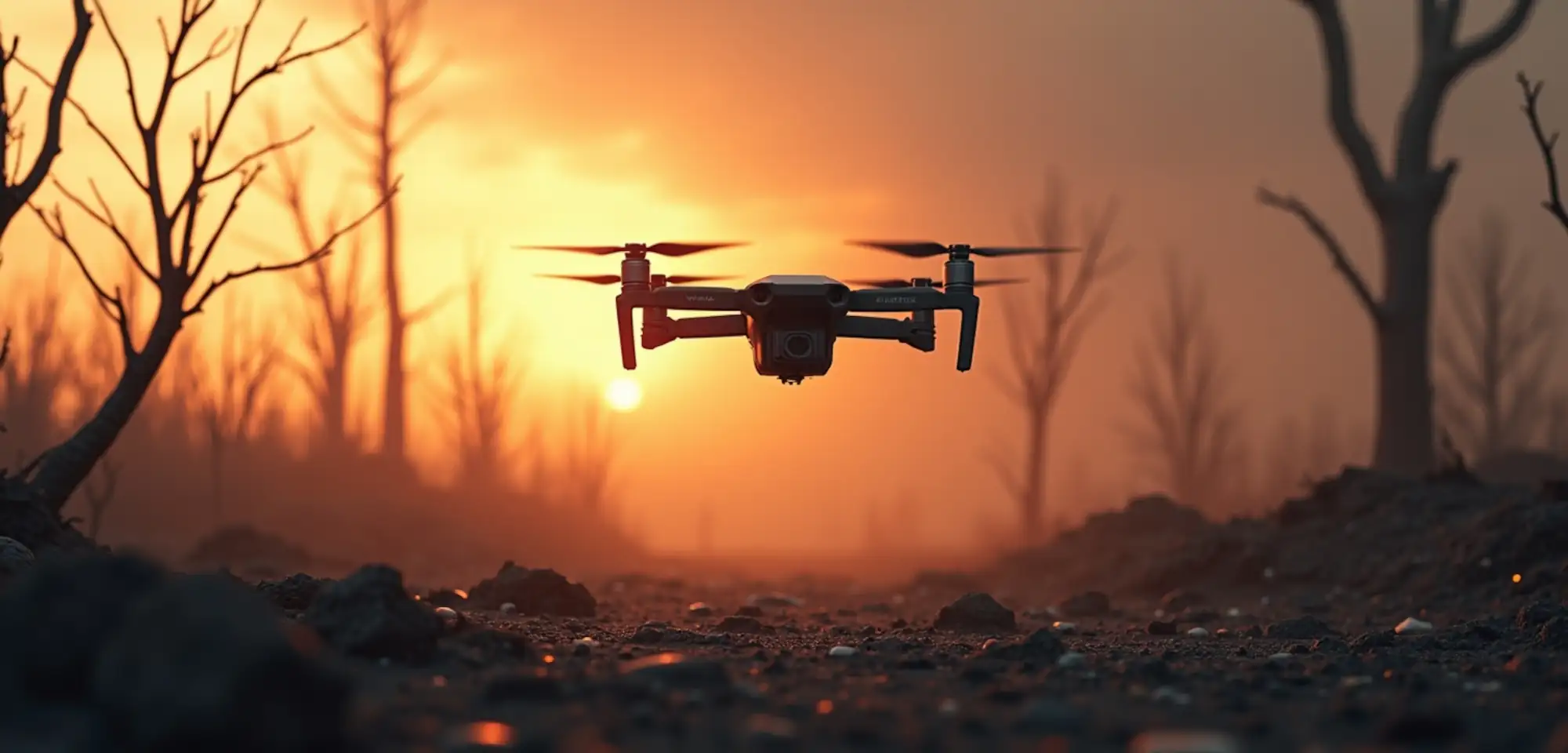
Such a complex system as an FPV drone consists of many components that combine into a single whole and cover one need or another. Flight controllers, motors, ESCs, batteries, video transmitters, cameras – all these parts must work synchronously, accurately, and stably. And it is the choice of components that determines whether the drone will be maneuverable, durable, capable of lifting the necessary cargo, or only suitable for training flights.
The problem is that the FPV component market is extremely diverse. Many model options, dozens of protocols, different form factors, specifications, standards – and all this is constantly evolving, improving, which creates even more misunderstanding. Currently, pilots face the fact that choosing the “right” configuration is a challenging task, not just a matter of budget.
So let's figure it out: what does an FPV drone consist of, what components are for what purpose, how do they interact with each other – and why is a competent choice of components a necessary skill for anyone involved with quadcopters, FPV drones, and the like.
What an FPV Drone Consists Of: Components
Before explaining each component separately, let's talk about what components generally exist. Therefore, for this system to work as it should, you need to understand what it consists of.
Here is a basic set of components used in FPV drones:
- Frame – the basis of the structure, determines the placement of elements and the type of drone
- Flight controller – manages all processes, analyzes data from sensors
- ESC (electronic speed controller) – transmits commands to motors, regulates their speed
- Motors – create thrust for drone movement
- Propellers – convert motor rotations into a directed flow
- Battery – powers all drone systems
- Camera – transmits images from the drone
- Video transmitter – broadcasts video signal to pilot's goggles or monitor
- Antenna – ensures stable communication between the drone and the pilot
- Receiver – receives control commands from the pilot
- GPS module – for navigation and return functions
- Barometer, compass, LED indication – additional sensors and peripherals
- Power system – distributes energy among components
- Pilot's goggles or monitor – point of visual control in real time
Frames for FPV
Let's start from the beginning. The frame is the basis of the drone, the so-called “skeleton”; all its components are placed on it. But in addition to placing parts, the frame also determines the type of drone, what it will be used for.
Depending on the form factor, the drone will have its limitations or be better suited for some specific use. Here is a list of possible frame shapes and a description of each:
- X-shaped (True-X, Stretched-X, Squashed-X): The most common shape, providing balanced flight. True-X has equal distance between all motors, Stretched-X has longer front/rear arms for better stability at high speeds, and Squashed-X has shorter front/rear arms for better maneuverability.
- H-shaped: Provides more space for electronics and better protection, but may be less maneuverable.
- Deadcat: Has arms positioned at an angle to avoid propellers entering the camera's field of view, which is more suitable for cinematic drones.
- Cinewhoop: Frames with protective ducts for propellers, making them safer for flights near people and objects.
Flight Controller for Drones
Now let's talk about the central element of an FPV drone, which is responsible for stability, controllability, and reaction to pilot commands. The flight controller (FC) processes signals from the radio transmitter, analyzes data from sensors, and forms commands for the motors via the ESC. It is the FC that decides how the drone should behave in the air – whether to maintain course, perform a maneuver, or stabilize after a gust of wind.
Main functions of the flight controller:
- Stabilization – compensates for the effects of wind, inertia, and external factors
- Command processing – converts pilot signals into drone actions
- Data collection – reads information from gyroscopes, accelerometers, barometers, GPS
- Motor control – sends signals to the ESC to regulate rotations
- Peripheral synchronization – GPS, LED, telemetry, loggers, emergency return
In military FPV drones, the controller must be reliable, protected from moisture and dust, compatible with Li-ion batteries, and capable of stable operation even in difficult conditions. This is the node that synchronizes all components and ensures an accurate reaction to external factors.
Electronic Speed Controller (ESC)
ESC is the executive element of an FPV drone that regulates the rotational speed of the motors. It receives digital signals from the flight controller and converts them into electrical impulses that change the rotations of each motor. It is the ESC that ensures the drone's precise reaction to pilot commands – from a smooth tilt to a sharp acceleration.
Brushless ESCs are used in FPV systems, capable of operating with high currents and frequencies. They support modern protocols, such as DShot, which provide fast command transmission. ESCs can be separate or integrated into a stack with the flight controller, which saves space and simplifies installation.
Main functions of ESC:
- Regulation of motor rotations – depending on flight controller commands
- Overload protection – prevents overheating and short circuits
- Protocol support – DShot, PWM, Oneshot, Multishot
- Telemetry – transmits data on current, temperature, voltage
- Automatic calibration – simplifies setup when assembling the drone
In military FPV drones, ESCs must withstand peak loads, operate stably at temperature fluctuations, and be as reliable as possible.
Motors: Types and Characteristics
Let's talk about the source of thrust that provides drone movement in the air. FPV systems use brushless electric motors that have high efficiency, fast reaction, and the ability to work with heavy loads. They receive signals from the ESC and change rotations according to pilot commands.
The choice of motors depends on the flight style, drone weight, battery type, and operating conditions. Freestyle requires instant reaction and power reserve, racing – lightness and speed, and military tasks – reliability, stability, and energy efficiency.
Key characteristics to pay attention to:
- Size and marking – determines the diameter and height of the stator
- KV value – revolutions per volt; affects speed and thrust
- Bearing type – ceramic or metal, affecting durability
- Housing design – open for cooling or closed for protection
- Propeller compatibility – shaft diameter, mounting type, screw size
In combat FPV drones, motors with a sealed housing, dust and moisture protection, and optimized energy consumption are often used – to ensure maximum flight range with limited charge.
Propellers, or what creates airflow
This element converts motor rotations into a directed airflow, creating thrust for drone movement. The maneuverability, stability, speed, and even noise during flight depend on the shape, size, and material of the propellers. Propellers work in conjunction with motors, and their choice affects the overall behavior of the drone.
Key characteristics to consider:
- Diameter – determines overall thrust; larger propeller blades – more thrust, but less maneuverability
- Number of blades – 2, 3, or 4; the more – the more stable, but efficiency decreases
- Pitch – angle of inclination of the blades; affects speed and load on the motor
- Material – plastic, nylon, carbon; determines whether the drone will be light, strong, or budget-friendly
- Blade shape – aggressive or smooth; affects the drone's reaction during maneuvers
In combat FPV drones, propellers with increased rigidity are often used, which better withstand impacts and do not deform under high loads. Noise is also important – in some scenarios, minimal acoustic visibility is required.
Batteries and Battery Packs for Drones
Every FPV drone or quadcopter needs a battery to power its system. It should also be noted that batteries can be of different chemistries, which determines flight duration, control style, permissible loads, safety, and, crucially, the use case. In the FPV sphere, the most common types of batteries are Li-ion and LiPo – each of which has its advantages, disadvantages, and a clear zone of effectiveness.
Li-ion Batteries
In military FPV drones, the priority shifts from instant power to energy efficiency, stability, and reliability. Therefore, Li-ion batteries are more often used here – mainly custom packs based on 18650 or 21700 format cells. They perform better at low temperatures and allow the drone to operate longer, as they release energy for a longer time.
Key advantages of Li-ion for military tasks:
- High energy efficiency
- Stability at low temperatures
- Modularity
- Logistics convenience
Such batteries allow performing reconnaissance or strike missions over long distances. The ability to maintain stable operation, the ability to create flexible battery packs – makes Li-ion a key element in combat FPV systems.
LiPo Batteries
However, one should not forget about LiPo batteries. Although they are usually used in the civilian sphere, for example, freestyle or racing – they have their own advantages over Li-ion batteries.
Yes, LiPo are more sensitive to temperatures, have a shorter lifespan, almost twice as short, and are also more expensive elements, so why are lithium-polymer batteries better than lithium-ion batteries? These batteries are known for their instant reaction, high current output, and lightness.
Key points to know about LiPo:
- High current discharge (C-rate) – fast motor reaction
- Low weight – good for maneuverable drones
- Wide range of form factors – easy to choose for any drone
- Sensitivity to damage – requires careful handling
Since LiPo have a high current output, they can be used in the military sphere when the drone needs more power, for example, to lift additional cargo. But in combat conditions, FPV needs to stay in the air longer, instead of high-speed flight, so in this area, they lose to Li-ion batteries.
FPV Camera: What is called the “eyes” of the drone
The camera is the main sensor of the drone, which works in conjunction with the video transmitter (VTX) and transmits the image to the pilot's goggles or monitor. Through it, the operator sees the flight “from a first-person perspective” and can precisely control the device in real time.
Main characteristics of cameras:
- Resolution – affects image clarity
- Field of view – a wide angle allows better orientation in space
- Latency – the lower, the more precise the control
- Light sensitivity – important for flying at dusk or at night
- Signal format – analog (PAL/NTSC) or digital (HD, DJI, Walksnail)
- Size and mounting – must match the drone frame
In military FPV drones, cameras with increased light sensitivity, protection against mechanical damage, and the ability to switch between day and night modes are often used. In civilian applications, the priority is clarity, colors, and minimal latency for freestyle or racing.
Video Transmitter (VTX): Communication between the drone and the pilot
The video transmitter (VTX) is a component that serves as a channel for transmitting images from the FPV camera to the pilot's goggles or monitor. It operates on a radio frequency (usually 5.8 GHz) and determines the quality, stability, and range of the video link.
VTX is the element that affects the drone's controllability in real time, especially in conditions of interference or long distances.
Main characteristics of VTX:
- Transmission power – from 25 mW (for training) to 800+ mW (for long flights)
- Number of channels – allows avoiding conflicts between several drones
- Signal format – analog (PAL/NTSC) or digital (HD systems DJI, Walksnail)
- SmartAudio / Tramp – protocols for remote power and channel configuration
- Cooling and protection – important for stable operation under high loads
In combat FPV drones, VTXs with high power, digital signal, overheating protection, and the ability to switch channels on the fly are used. This allows maintaining communication in difficult conditions – behind obstacles, at long distances, or under active electronic warfare.
Antenna: Video Link Stability
Antennas are the final element in the video link chain, responsible for the quality and stability of the signal between the drone and the pilot. It works in conjunction with the video transmitter (VTX) and directly affects the range, interference immunity, and overall reliability of the transmission. An incorrectly selected antenna can negate the advantages of even the best camera or VTX.
Main characteristics of antennas:
- Polarization type – linear or circular; circular is better for flights with interference
- Shape – cloverleaf, pagoda, stubby, patch; each has its own zone of effectiveness
- Connector – SMA, RP-SMA, MMCX, U.FL; must match VTX and frame
- Frequency – usually 5.8 GHz; important for system compatibility
- Placement – affects coverage area; the antenna must be free from shielding
In combat FPV drones, compact, impact-resistant antennas with circular polarization are often used, which provide a stable signal even under active electronic warfare. In civilian applications, the priority is lightness, ease of installation, and image quality at short distances.
Innovations: Fiber Optic Reels
In response to the constant use of electronic warfare (EW) means that jam communication between the drone and the pilot, an alternative solution has been developed – fiber optic reels. This is wound fiber that allows transmitting video and control through a physical communication channel, completely independent of radio frequencies.
A fiber optic reel is attached to the drone and gradually unwinds during flight, providing a stable, protected data transmission channel. Thanks to the direct physical connection, the signal is not subject to radio interference, and the image is transmitted with maximum clarity – without artifacts, delays, or loss of quality.
Receiver (RX): Drone Control Channel
The receiver is an FPV drone component that receives control signals from the pilot via a radio transmitter. It transmits these commands to the flight controller, which then processes them and forms appropriate actions. Without a stable connection between the pilot and the receiver, the drone loses controllability.
Main characteristics of the receiver:
- Communication protocol – SBUS, CRSF (Crossfire), ELRS; affects transmission speed and stability
- Number of channels – determines how many commands can be transmitted simultaneously
- Size and weight – important for compact frames
- Antenna – single or dual channel, affects range and signal stability
- Compatibility with equipment – must match the transmitter (e.g., TBS, Radiomaster, FrSky)
In combat FPV drones, receivers with ELRS or Crossfire protocols are often used, which provide stable communication over long distances, have low latency, and are resistant to interference. In civilian applications, the priority is ease of setup, lightness, and compatibility with popular equipment.
GPS Module: Orientation in Space
The GPS module is an additional FPV drone component that allows orientation in space, fixing coordinates, building routes, and implementing automatic return functions.
Main capabilities of the GPS module:
- Coordinate fixing – allows recording the route or starting point
- “Return to Home” function – automatic return upon loss of communication
- Support for navigation firmwares – iNav, ArduPilot
- Interaction with barometer and compass – for precise positioning
- Telemetry – transmission of coordinates to the remote control or ground station
In military FPV drones, the GPS module often works in conjunction with a barometer and magnetometer, allowing the drone to fly along a given route, stabilize altitude, and return after completing the task – without pilot intervention.
Additional Sensors: Stability and Orientation
In addition to the main components, an FPV drone can be modified with additional sensors that improve stability, positioning accuracy, and functionality.
In combat configurations, these sensors can be important because they help the drone orient itself without pilot intervention, stabilize altitude, maintain course, and adapt to changes in the environment.
Main types of additional sensors:
- Barometer – measures atmospheric pressure, allows determining altitude and maintaining its stability.
- Compass (magnetometer) – provides precise orientation of the drone relative to the cardinal directions, which is important for navigation and course keeping.
- Sonar/Lidar – used for precise distance measurement to the surface, useful for automatic landing or low-altitude flights.
- Optical flow sensor – helps the drone maintain position indoors or in the absence of a GPS signal by analyzing movement beneath it.
- Collision sensors – warn of obstacles and help avoid collisions, which is especially important in complex conditions.
These additional sensors increase the autonomy and reliability of FPV drones, allowing them to perform more complex tasks and operate in conditions where manual control is difficult or impossible.
Power System (PDB or Integrated)
The FPV drone's power system is the part that distributes electrical power from the battery to all components: ESC, flight controller, VTX, sensors, etc. In some configurations, a separate power distribution board (PDB) is used, while in others, these functions are integrated directly into the controller or ESC stack. The main task is to ensure stable voltage, short-circuit protection, and convenient connection.
Main features of the power system:
- Form factor – separate board or integration into FC/ESC
- Supply voltage – support for 2S–6S or more, depending on the battery
- Noise filtering – capacitors for stable operation of VTX and sensors
- Protection – from overvoltage, overheating, short circuits
- Power ports – for VTX, LED, GPS, camera, loggers
In combat FPV drones, the power system must be as reliable as possible: with filtering, protection, and the possibility of quick repair or replacement in the field. In civilian applications, the priority is compactness and ease of installation.
Foggles or Monitor: The Pilot's Point of View
Goggles or a monitor are the final point through which the pilot sees the image from the drone in real time. They allow precise control of the device, reacting to changes in space, speed, and obstacles. The choice between goggles and a monitor depends on the flight style, operating conditions, and personal preferences.
Main features of the FPV interface:
- Signal type – analog or digital; digital systems provide a clearer image
- Resolution and brightness – affect comfort and control precision
- Latency – important for fast maneuvers
- DVR availability – flight recording for analysis or reporting
- Ergonomics – weight, shape, ventilation, wearing comfort
In combat FPV drones, the priority is digital goggles with low latency, high light sensitivity, and recording capability. In civilian applications, convenience, image quality, and accessibility are important.
Every element has its meaning
We have briefly reviewed most of the components used in drones. Since an FPV drone is a holistic system in which each component performs its specific function, the controller, motors, camera, battery, antenna – all parts must be correctly selected for your needs. And depending on the operating conditions, you need to be attentive to these “trifles.”
Therefore, choose the configuration correctly before launching the drone. Then it will cover your needs and fulfill the tasks assigned to it.
News and Reviews


01/09/2026
Top News for the Morning of September 1, 2026. Russia is using tactics of attrition against Kyiv
BTRY.ENERGY offers news and articles in Ukrainian with a focus on preserving Ukrainian identity, citizens' rights, and t...

31/08/2026
Pentagon: Arsenal to be expanded
BTRY.ENERGY offers news and articles in Ukrainian with a focus on preserving Ukrainian identity, citizens' rights, and t...

31/08/2026
Three major American publications focus on Ukraine. Why does this matter?
BTRY.ENERGY offers news and articles in Ukrainian with a focus on preserving Ukrainian identity, citizens' rights, and t...
31/08/2026
Top News for the Morning of August 31, 2026. The world has finally entered a global conflict
BTRY.ENERGY offers news and articles in Ukrainian with a focus on preserving Ukrainian identity, citizens' rights, and t...

28/08/2026
A new nuclear technology: micro-reactors. Why is this important?
BTRY.ENERGY offers news and articles in Ukrainian with a focus on preserving Ukrainian identity, citizens' rights, and t...
28/08/2026
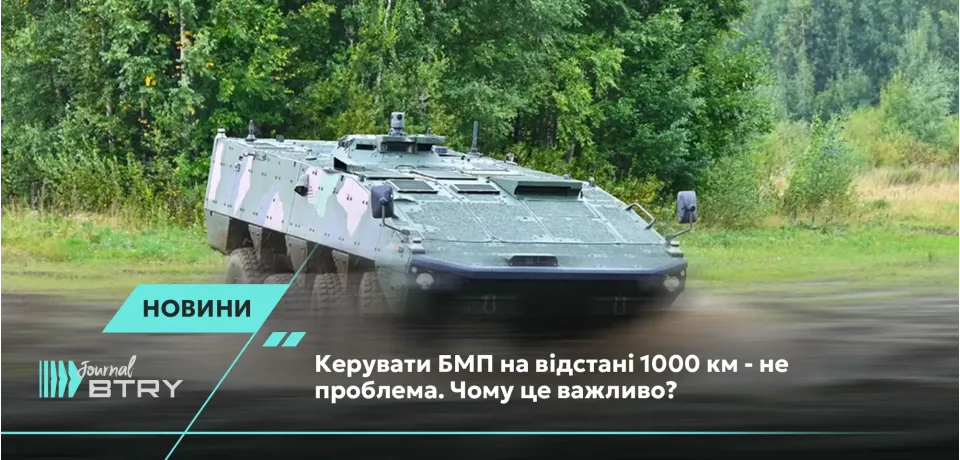
Operating an infantry fighting vehicle (IFV) from a distance of 1,000 km is not a problem. Why is this important?
BTRY.ENERGY offers news and articles in Ukrainian with a focus on preserving Ukrainian identity, citizens' rights, and t...
Consultation
Need more information?
Would you like to learn more about BTRY.ENERGY or get a personal consultation - fill out the form and we will contact you


