
 Product Catalog
09.05.25
Choosing a battery? Understand the difference between LiPo and Li-ion — and don’t make a mistake. Everything you need to know about Li-ion and LiPo: from chemistry to ecology — in simple terms
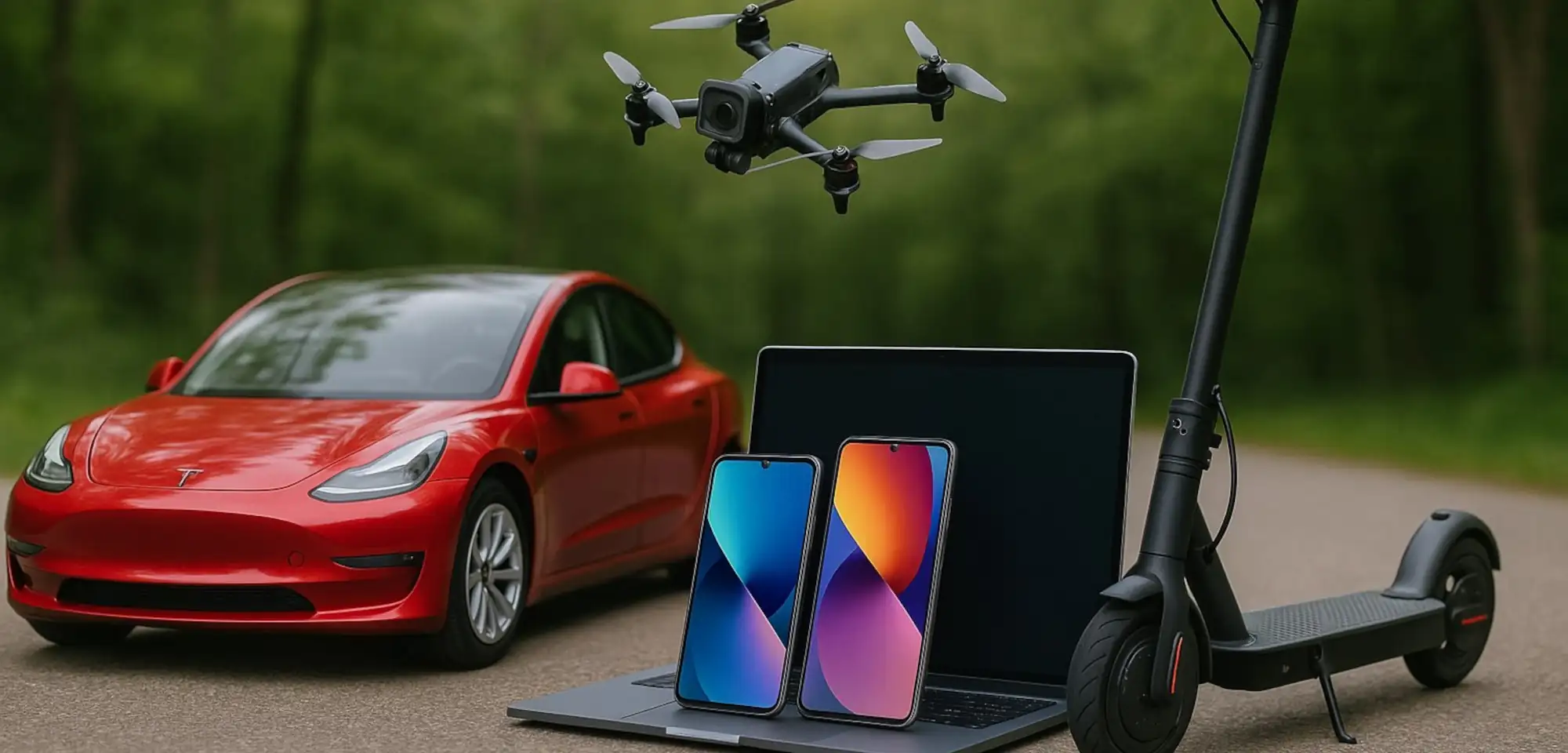
Chemical Characteristics of LiPo and Li-ion Batteries
Li-ion (lithium-ion) batteries use a liquid electrolyte, which provides high energy density and long lifespan. The most common form factors are cylindrical (18650, 21700) and prismatic.
LiPo (lithium-polymer) batteries use a gel-like electrolyte, allowing for flexible and compact shapes. They have high discharge rates, making them ideal for dynamic loads.
Comparison of Li-ion and LiPo Characteristics
| Characteristic | Li-ion | LiPo |
| Energy Density | High (~250-300 Wh/kg) | Medium (~150-250 Wh/kg) |
| Discharge Current | Limited (up to ~10C) | High (up to ~100C) |
| Lifespan | Long (~500-1000 cycles) | Medium (~200-500 cycles) |
| Shape | Rigid (cylinders, prisms) | Diversity form factors (flat packs) |
| Safety | Relatively stable | Prone to inflate and combustion |
Applications of Li-ion and LiPo Batteries
FPV Drones and Sport Applications
FPV (First Person View) drones require batteries with high discharge rates for rapid acceleration and maneuvering. LiPo is optimal due to:
- High energy output (up to 100C) ensuring instant acceleration.
- Lightweight design that doesn’t burden the drone.
- Flexibility in configuring capacity and voltage tailored to specific models.
Examples: FPV racing, cinematic drones, aerial photography.
But it is important to note that Li-ion cells dominate in the military sector. And there are several significant reasons for this:
- Higher energy density: Li-ion batteries have a greater energy density compared to LiPo.
- Better thermal stability: Li-ion heats up less under high currents and handles temperature stress more effectively.
- Standardization and ease of assembly: For example, 21700 cells are standardized cylindrical energy units that are easy to assemble into configurations like 6S2P, 4S3P, etc.
- Lower risk of swelling or damage: LiPo batteries tend to swell if misused. The 21700 cells have a metal casing that protects the chemistry from damage.
- Cost: Pre-assembled battery packs based on Li-ion cells are generally cheaper than LiPo packs.
Consumer Electronics and Household Devices
Li-ion dominates in consumer electronics thanks to high energy density and stability.
Main advantages:
- Long lifespan (~500–1000 cycles).
- Compact in cylindrical (18650, 21700) and prismatic formats.
- Relative safety in daily use.
Examples: laptops, cordless tools, electric scooters.
Military Use
In military technologies, key factors are mobility, autonomy, and high power.
LiPo is used in:
- Tactical drones for reconnaissance, thanks to high power and flexible design.
- Portable military gear (communication systems, exoskeletons, active armor), where fast energy access is crucial.
Li-ion is used in:
- Power systems for military vehicles (electronic components of armored vehicles).
- Electromagnetic and laser systems for their stability and longevity.
- EW/SIGINT systems: Power supply implementation on Li-ion cells is possible, though Li-NMC cells are more commonly used.
Electric Transport and Industrial Use
Li-ion batteries offer major advantages over LiPo in electric transport, making them the dominant choice for EVs and large mobile systems.
Higher Energy Density
Li-ion provides up to 300 Wh/kg versus LiPo’s 150–250 Wh/kg. This means more range per charge and more compact battery packs in EVs.
Longer Lifespan
Li-ion can handle 500–1000 charge cycles without significant degradation, while LiPo typically degrades after 200–500 cycles — critical for long-term EV use.
Safety and Thermal Stability
Li-ion batteries are chemically more stable, thus less prone to thermal runaway and combustion than LiPo. EVs also use thermal regulation systems for added safety.
Energy Recuperation Capability
Li-ion works better in regenerative braking modes, allowing energy recovery during deceleration, improving overall efficiency.
Optimized for High-Voltage Systems
In large electric vehicles (buses, trucks), high-voltage battery systems rely on Li-ion for better voltage stability and energy control.
Thanks to stability, energy density and longevity, Li-ion is ideal for electric transport. LiPo, while powerful, is better suited to lightweight, specialized vehicles where fast discharge is key.
Ecological Aspects
Battery technology has ecological impacts across all life-cycle stages: production, use, and disposal. Both Li-ion and LiPo have pros and cons environmentally.
Material Extraction and Manufacturing
Key materials: lithium, cobalt, nickel, graphite.
- Lithium and cobalt mining has major ecological impacts: resource depletion, water pollution, high energy use.
- Li-ion production uses fewer harmful components than LiPo, which may contain extra polymer compounds.
- Companies like ProLogium are developing solid-state batteries to reduce rare-earth material extraction.
Use and Ecosystem Impact
ADVANTAGES: Li-ion is more energy-efficient, lowering overall energy consumption and reducing CO₂ emissions in transport.
DRAWBACKS: LiPo is more prone to mechanical damage, which can lead to toxic electrolyte leakage if mishandled.
Recycling and Disposal
Main issue: both types contain toxic substances (cobalt, lithium) that are difficult to recycle.
- Li-ion is more recyclable, though costly and energy-intensive.
- LiPo is rarely recycled and often ends up in landfills, contributing to pollution.
Future Ecological Solutions
Solid-state batteries may resolve safety and disposal issues, being less toxic and more stable.
Graphene batteries show promise with high efficiency and eco-friendliness due to reduced rare-earth material needs.
Improved recycling methods — especially chemical extraction of lithium and cobalt — can minimize environmental harm.
Li-ion offers better longevity and recyclability, while LiPo is more adaptable but harder to dispose of. Advances in solid-state and graphene technologies may enable greener energy storage solutions.
News and Reviews


25/09/2026
Top News for the Morning of September 25, 2026. Dual-use technologies are playing an increasingly important role in current wars
BTRY.ENERGY offers news and articles in Ukrainian with a focus on preserving Ukrainian identity, citizens' rights, and t...
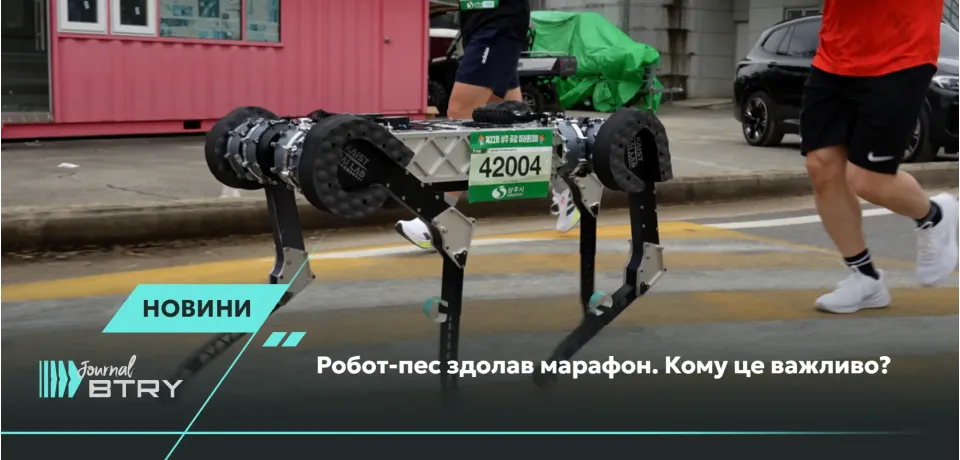
24/09/2026
A robot dog has completed a marathon. Who does this matter to?
BTRY.ENERGY offers news and articles in Ukrainian with a focus on preserving Ukrainian identity, citizens' rights, and t...
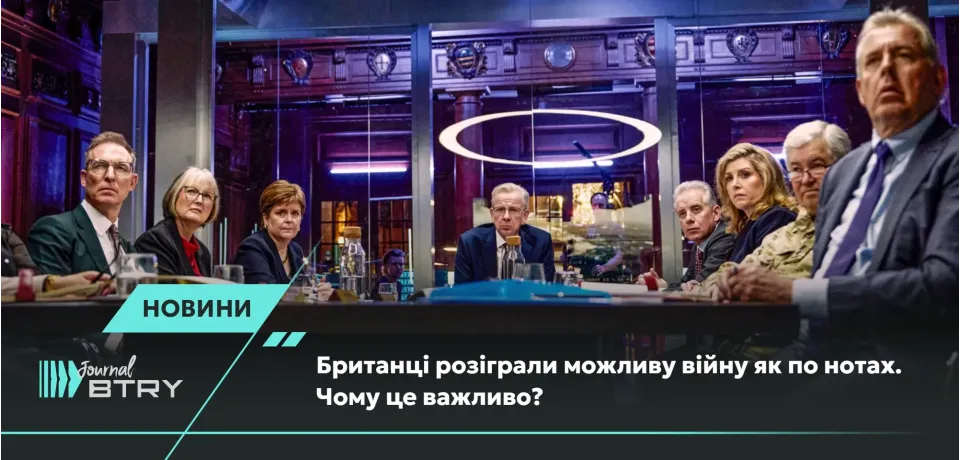
24/09/2026
The British played out a potential war scenario with clockwork precision. Why does this matter?
BTRY.ENERGY offers news and articles in Ukrainian with a focus on preserving Ukrainian identity, citizens' rights, and t...
24/09/2026
Top News for the Morning of September 24, 2026. The NRK as an element of "Vivaldi," the de-occupation of Donbas, and the blocking of the enemy
BTRY.ENERGY offers news and articles in Ukrainian with a focus on preserving Ukrainian identity, citizens' rights, and t...
23/09/2026
The CIA’s Reading Room: Declassified Documents
BTRY.ENERGY offers news and articles in Ukrainian with a focus on preserving Ukrainian identity, citizens' rights, and t...
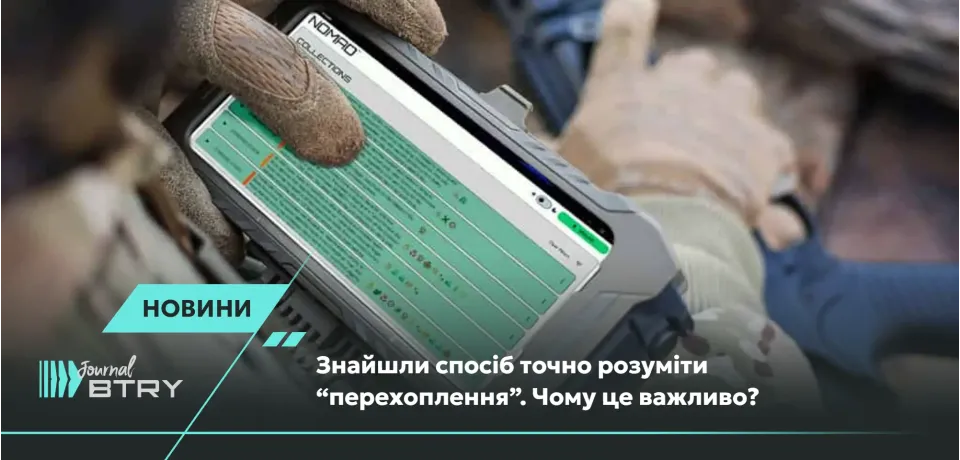
23/09/2026
A way has been found to accurately understand "interception." Why is this important?
BTRY.ENERGY offers news and articles in Ukrainian with a focus on preserving Ukrainian identity, citizens' rights, and t...
Consultation
Need more information?
Would you like to learn more about BTRY.ENERGY or get a personal consultation - fill out the form and we will contact you


