
 Product Catalog
24.03.26
From the first primitive connections to high-precision automated processes, the history of battery welding is a story of the evolution of engineering thought

In the early stages of battery development, namely from the late 19th to the early 20th century, the main connection methods were mechanical contacts or tin soldering.
Soldering made it possible to create more reliable electrical connections, but it had significant drawbacks, such as low mechanical strength, difficulty in scaling, and a high risk of damaging the cells due to elevated temperatures.
With the development of portable electronics, it became clear that a different approach was needed.
Transition to Resistance Welding
A real breakthrough came with the introduction of contact, or spot welding. This method is based on passing a high current through the contact point for a very short time, which causes localized heating and bonding of the metals.
The advantages of this method include:
- minimal thermal impact on the battery
- high process speed
- possibility of automation
Spot welding has become the standard for assembling battery packs, especially with the advent of Li-Ion cells. Over time, more advanced methods have emerged:
- laser welding
- ultrasonic welding
- pulse welding
These methods make it possible to efficiently weld metals such as copper and silver, which positively affects the quality of large battery assemblies, for example in electric vehicles.
Nevertheless, the main welding methods today remain spot welding and laser welding.
Main Types of Welding by Materials
After reviewing the evolution of welding technologies, let us move on to the materials that form the basis of these processes. The choice of metal determines not only the connection technique, but also the efficiency of current transfer, heat losses, and the durability of the battery pack.
Each material has its own physical properties that dictate different welding conditions and areas of application, so let us consider them separately and in more detail.
Nickel Welding
Nickel is one of the most common materials used in battery welding. Nickel strips are easy to spot weld and bond well with steel battery cases. This is the standard choice for most battery assemblies.
Reasons for popularity:
- good electrical conductivity
- corrosion resistance
- relatively low hardness
Nickel-Copper Welding
Composite strips (nickel + copper) are used to achieve a balance between conductivity and manufacturability. Copper provides low resistance, while nickel acts as a contact layer for welding.
Advantages:
- better efficiency in high-current systems
- compatibility with standard equipment
- an excellent solution for electric transport, UAVs, UGVs, and high-power battery assemblies
Our website offers battery assemblies with both types of welding, for example for FPV drones. You can explore our products via the link.
Copper Welding
Copper has one of the best electrical conductivities among metals, but it creates certain challenges during the welding process, such as difficulty in achieving a stable weld.
That is why more advanced methods such as laser or ultrasonic welding are typically used when working with copper.
Silver Welding
Silver has the best electrical conductivity of all metals, but due to its high cost, it is used only in limited applications, such as specialized high-precision systems or in military and aerospace technologies.
Advantages:
- minimal electrical resistance
- excellent contact stability
Disadvantages:
- high cost
- processing complexity
We Keep Moving Forward
Today, the choice of welding method is determined not only by materials, but also by requirements for power, durability, and safety. And although technologies continue to evolve, the main goal remains unchanged: to create the most efficient and reliable path for energy flow.
Our company BTRY.ENERGY is also continuously evolving. We manufacture battery assemblies in any volume — from single custom orders to large-scale production in the thousands.
We also develop custom energy solutions tailored to your needs through our in-house R&D department.
You can find more details about submitting such a request via the link.
News and Reviews


01/09/2026
Top News for the Morning of September 1, 2026. Russia is using tactics of attrition against Kyiv
BTRY.ENERGY offers news and articles in Ukrainian with a focus on preserving Ukrainian identity, citizens' rights, and t...
31/08/2026
Pentagon: Arsenal to be expanded
BTRY.ENERGY offers news and articles in Ukrainian with a focus on preserving Ukrainian identity, citizens' rights, and t...
31/08/2026
Three major American publications focus on Ukraine. Why does this matter?
BTRY.ENERGY offers news and articles in Ukrainian with a focus on preserving Ukrainian identity, citizens' rights, and t...
31/08/2026
Top News for the Morning of August 31, 2026. The world has finally entered a global conflict
BTRY.ENERGY offers news and articles in Ukrainian with a focus on preserving Ukrainian identity, citizens' rights, and t...
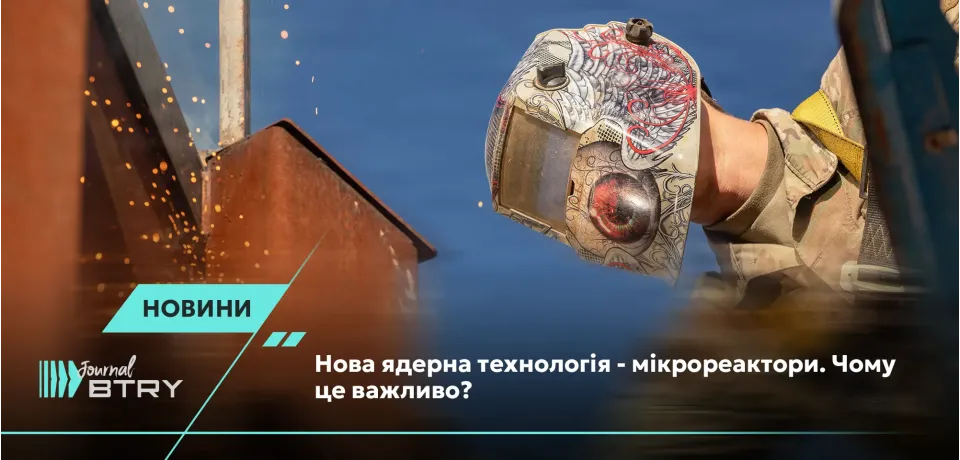
28/08/2026
A new nuclear technology: micro-reactors. Why is this important?
BTRY.ENERGY offers news and articles in Ukrainian with a focus on preserving Ukrainian identity, citizens' rights, and t...
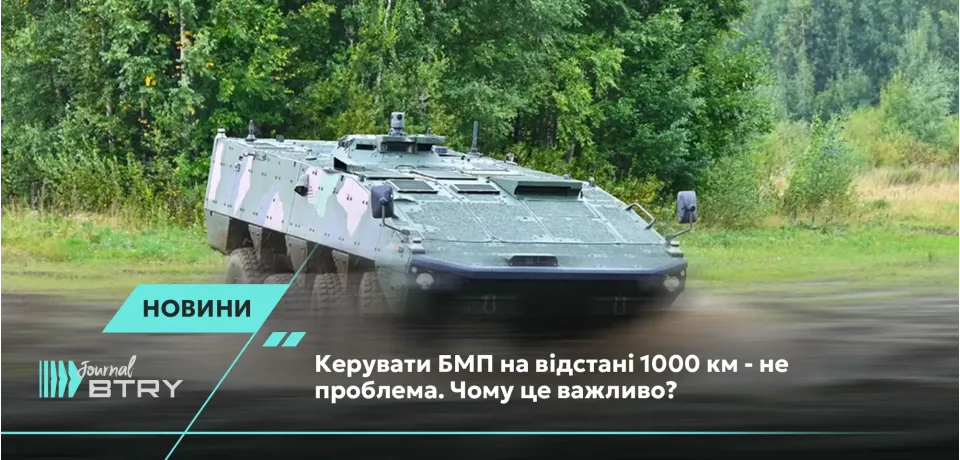
28/08/2026
Operating an infantry fighting vehicle (IFV) from a distance of 1,000 km is not a problem. Why is this important?
BTRY.ENERGY offers news and articles in Ukrainian with a focus on preserving Ukrainian identity, citizens' rights, and t...
Consultation
Need more information?
Would you like to learn more about BTRY.ENERGY or get a personal consultation - fill out the form and we will contact you


