
 Product Catalog
20.08.25
Modern batteries allow us to use technologies that once seemed like science fiction. From portable devices to drones and electric vehicles — their efficiency determines how convenient and reliable our daily use of technology can be
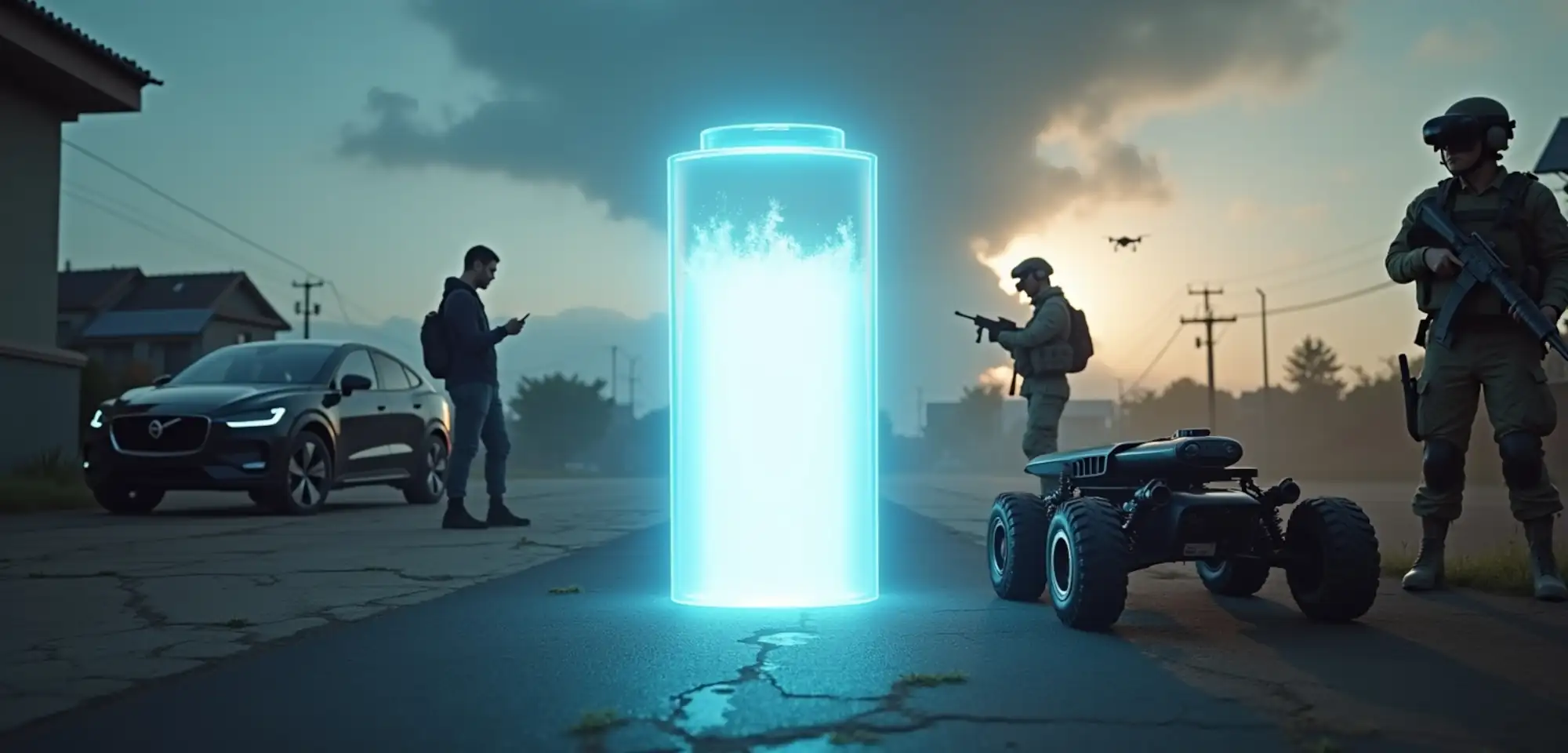
Rechargeable batteries have become so common today that we hardly notice their presence. They quietly work in our smartphones, give freedom of movement to electric cars, lift drones into the sky, and power sophisticated military equipment.
Without them, the world would look completely different. Batteries are the invisible foundation of technological progress that allows us to stay connected, move forward, and unlock new opportunities.
Let us examine where and how batteries and battery packs are used. We will touch on both civilian and military applications, and focus on lithium-ion technologies — the backbone of today’s energy systems in modern devices.
Batteries in the Civilian Sector
Electric Vehicles
Electric vehicles are one of the most striking examples of the widespread use of batteries in the civilian sector. The foundation of every EV is its battery, which powers the electric motor. The vast majority of modern EVs use lithium-ion batteries due to their high energy density, long lifespan, and relatively fast charging.
Among lithium-ion technologies used in EVs, the most common are Li-NMC (nickel-manganese-cobalt), Li-NCA (nickel-cobalt-aluminum), and LFP (lithium-iron-phosphate). Manufacturers such as Tesla have actively used NCA batteries in the past, while other major players like Volkswagen, Hyundai, Ford, and General Motors rely on NMC. LFP batteries, known for their safety and durability, are rapidly gaining popularity, especially in budget models and commercial transport, thanks to manufacturers such as CATL and BYD.
Civilian Drones
Drones, or unmanned aerial vehicles (UAVs), also heavily rely on battery technologies. Most commercial and consumer drones, including FPV drones, use lithium-polymer (LiPo) batteries. LiPo batteries are well-suited for drones due to their high discharge rates, which power strong motors, and relatively low weight, which is crucial for flight time.
Some FPV drones may also use lithium-ion (Li-ion) batteries, especially those requiring higher capacity and longer flight duration, but with less demand for high discharge current. Battery manufacturers for drones offer a wide range of LiPo and Li-ion batteries tailored for different needs.
Consumer Electronics (FPV goggles, smartphones, laptops, etc.)
In daily life, we constantly interact with battery-powered devices. Smartphones, laptops, tablets, wireless headphones, smartwatches, and FPV goggles — all of them use compact and efficient lithium-ion or lithium-polymer batteries. These batteries provide long runtime, fast charging, and high energy density, enabling slim and lightweight devices.
For example, FPV goggles often use small LiPo or Li-ion batteries that power displays and video receivers. Consumer electronics manufacturers such as Apple, Samsung, Dell, and HP use lithium-ion batteries, often custom-designed for their devices to optimize performance and size.
Batteries in the Military Sector and Specialized Equipment
The military sector is another critical area where battery technologies play a vital role. A reliable and efficient power source is essential for operating various military equipment and systems, often under extreme conditions.
Military Equipment (Ground, Air, Naval)
Ground military vehicles such as tanks, armored personnel carriers, and other heavy machinery traditionally use lead-acid batteries due to their reliability, vibration resistance, and ability to operate across a wide temperature range. However, with technological advancements, lithium-ion batteries are increasingly being adopted, offering lighter weight, higher energy density, and longer lifespan. This improves mobility and efficiency of military vehicles.
In aerial military equipment, particularly drones and unmanned aerial vehicles (UAVs), lithium-ion (Li-ion) batteries are the main power source, while lithium-polymer (LiPo) batteries are used less frequently. They provide the necessary power for flight, maneuvering, and onboard systems. For military drones, especially FPV drones used for reconnaissance and strike missions, high discharge rates and low weight are critical.
In naval military applications, including submarines, surface ships, and unmanned surface vehicles, batteries are used to power electrical systems, navigation equipment, and backup power. Here too, there is a shift from traditional lead-acid batteries to modern lithium-ion solutions, which offer better performance and smaller size.
Specialized Equipment (Communications, Portable Devices)
Beyond large-scale machinery, batteries are indispensable in a variety of specialized military equipment. This includes portable radios, communication systems, night-vision devices, thermal imagers, GPS units, medical equipment, and other gear used by soldiers in the field.
For these devices, compactness, light weight, reliability, and wide operating temperature ranges are crucial. Lithium-ion batteries, with their high energy density and durability, are an excellent choice for such applications.
Battery Chemistry and Types
Rechargeable batteries differ not only in form and size but also in chemical composition, which defines their main characteristics, such as energy density, lifespan, safety, and cost.
Main Types of Battery Chemistry
Historically and still today, various chemistries are used for batteries:
- Lead-acid (SLA): The oldest and most widespread type, known for reliability and low cost. Used mainly in vehicles (starter batteries), uninterruptible power supplies, and some military applications. Low energy density and sensitive to deep discharge.
- Nickel-cadmium (NiCd): High cycle life and ability to operate at low temperatures. However, they suffer from memory effect and contain toxic cadmium, limiting their use.
- Nickel-metal hydride (NiMH): An improved version of NiCd, with higher energy density and less pronounced memory effect. Used in hybrid cars and some consumer electronics.
- Lithium-ion (Li-ion): The most common type in modern electronics and electric transport, thanks to high energy density, no memory effect, and low self-discharge.
Types of Li-ion Batteries (LiCoO2, LiFePO4, LiMnO2, NMC, NCA)
Lithium-ion batteries have several types, distinguished by the cathode chemistry, which affects their performance:
- Lithium-cobalt oxide (LiCoO2 or LCO): High energy density, making them ideal for smartphones, laptops, and portable electronics where compact size matters. However, they are less stable and have shorter lifespan compared to other Li-ion types.
- Lithium-manganese oxide (LiMnO2 or LMO): Provide high discharge rates and better thermal stability than LCO, but lower energy density and shorter lifespan. Used in power tools, medical equipment, and some EVs.
- Lithium-iron-phosphate (LiFePO4 or LFP): Known for safety, long cycle life (3,000–6,000 cycles), and stability even at high temperatures. Lower energy density compared to LCO and NMC, but their longevity and safety make them attractive for EVs (especially budget models), energy storage systems, and industrial use.
- Lithium-nickel-manganese-cobalt (Li-NMC): Combine the benefits of LCO and LMO, offering high energy density, moderate power, and good lifespan. One of the most popular types for EVs (e.g., Volkswagen, Hyundai, Ford) and power tools, providing balance between performance, safety, and cost.
- Lithium-nickel-cobalt-aluminum (Li-NCA): Highest energy density among commercial Li-ion batteries, enabling maximum EV driving range. Used notably by Tesla. However, they are less stable and more expensive to produce than NMC.
Each of these Li-ion types has unique advantages and disadvantages, making them suitable for different applications depending on priorities — maximum energy density, safety, lifespan, or cost.
Why This Matters
Rechargeable batteries, especially lithium-ion and their variants, have become an integral part of the modern technological landscape. Their use spans a wide range of fields — from everyday consumer electronics like smartphones and laptops to revolutionary EVs transforming the transport industry. They drive innovations in UAVs, including commercial drones and FPV systems, used in both civilian and military contexts.
In the military sector, batteries provide critical power for ground, air, and naval equipment, as well as for specialized gear used on the battlefield. Ongoing advancements in chemistries such as LiFePO4, NMC, and NCA enable the creation of safer, longer-lasting, and higher-density batteries that meet the growing demands of various industries.
Thus, batteries are not just power sources but a fundamental component enabling the functioning and development of modern technologies. Continuous improvements in batteries highlight their irreplaceable role in powering nearly every aspect of our lives — from personal comfort to national security.
News and Reviews


01/09/2026
Top News for the Morning of September 1, 2026. Russia is using tactics of attrition against Kyiv
BTRY.ENERGY offers news and articles in Ukrainian with a focus on preserving Ukrainian identity, citizens' rights, and t...

31/08/2026
Pentagon: Arsenal to be expanded
BTRY.ENERGY offers news and articles in Ukrainian with a focus on preserving Ukrainian identity, citizens' rights, and t...

31/08/2026
Three major American publications focus on Ukraine. Why does this matter?
BTRY.ENERGY offers news and articles in Ukrainian with a focus on preserving Ukrainian identity, citizens' rights, and t...

31/08/2026
Top News for the Morning of August 31, 2026. The world has finally entered a global conflict
BTRY.ENERGY offers news and articles in Ukrainian with a focus on preserving Ukrainian identity, citizens' rights, and t...

28/08/2026
A new nuclear technology: micro-reactors. Why is this important?
BTRY.ENERGY offers news and articles in Ukrainian with a focus on preserving Ukrainian identity, citizens' rights, and t...
28/08/2026
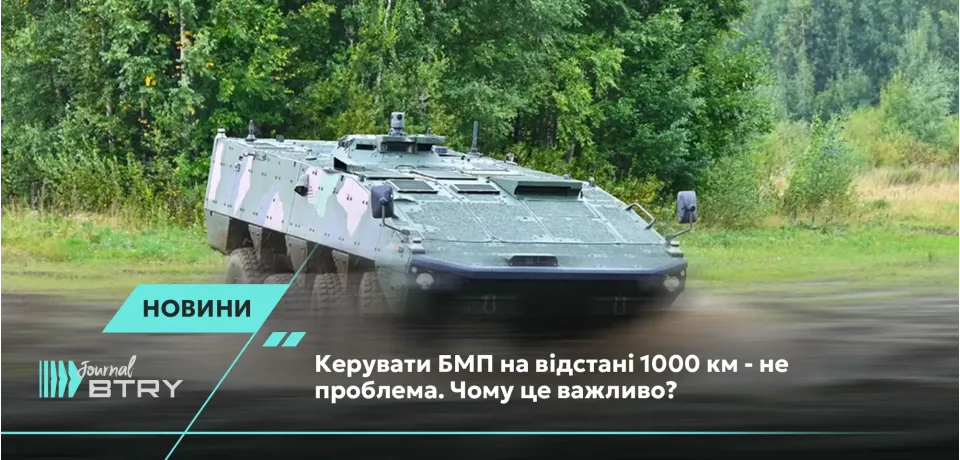
Operating an infantry fighting vehicle (IFV) from a distance of 1,000 km is not a problem. Why is this important?
BTRY.ENERGY offers news and articles in Ukrainian with a focus on preserving Ukrainian identity, citizens' rights, and t...
Consultation
Need more information?
Would you like to learn more about BTRY.ENERGY or get a personal consultation - fill out the form and we will contact you


