
 Product Catalog
31.12.25
Asymmetric technologies of unmanned systems increasingly define battlefield advantage without mass deployment of manpower, and therefore their expansion is taking place across all segments of global military rearmament
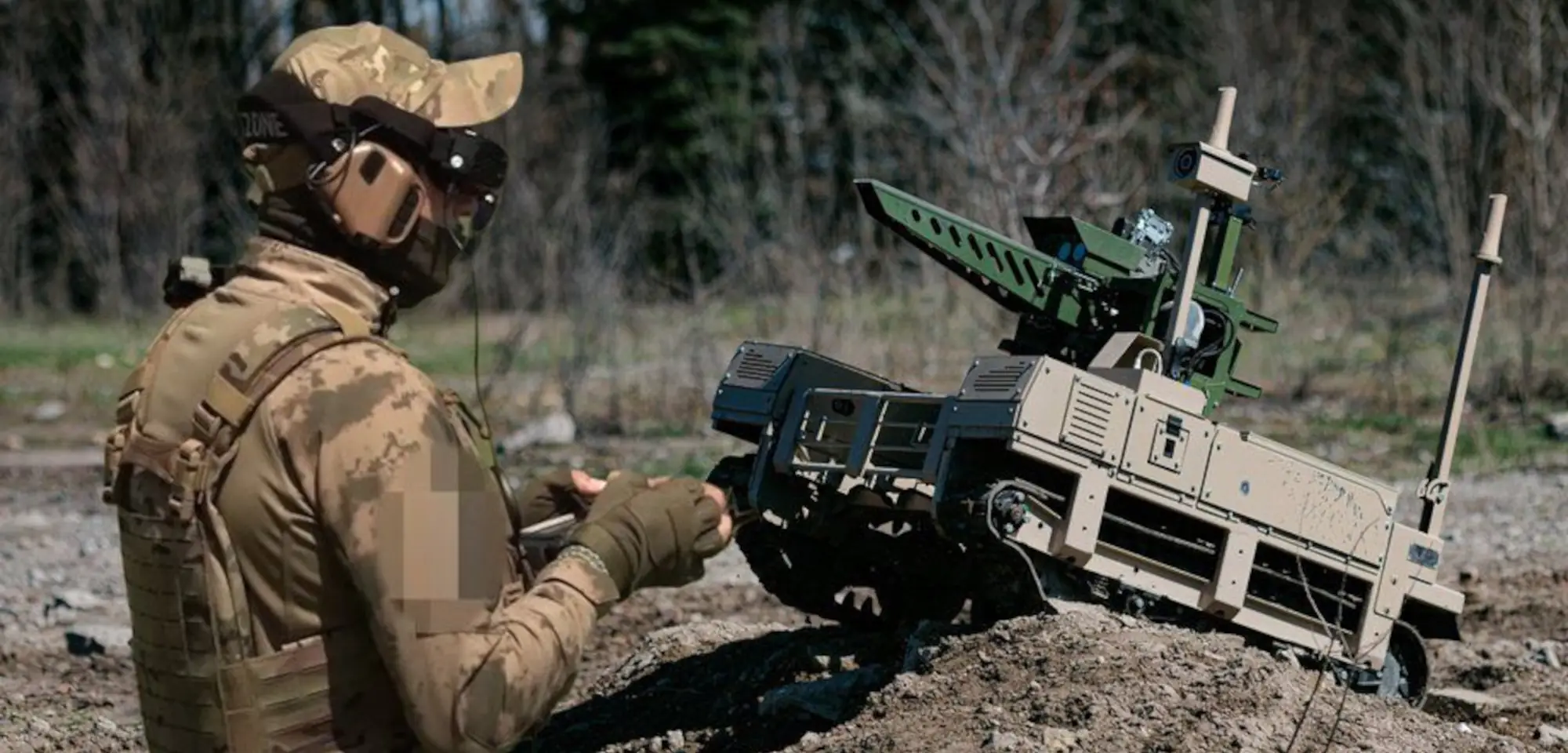
In December 2025, there was a rapid buildup of technologies in the field of unmanned systems, ground robotic complexes and electronic warfare: the Armed Forces of Ukraine are restructuring to create drone battalions, while the British RUSI calculated that breaking through Russian air defenses requires a salvo of at least 100–150 long-range UAVs; China’s LOONG UAV tested the strike LOONG M9, the US launched the “Drone Dominance Program” to procure hundreds of thousands of drones, and Ukraine’s Ptashka Drones achieved a 50 km fiber-optic range, Vyriy integrated “Cruise Control,” WIY DRONES introduced the STRILA interceptor, AirNet developed a net-launcher, Scopa Industries is preparing the jet engine “Shepit,” Stinex created the “ZORKO” detector, and Skyeton’s Raybird proved effective during Iron Titan exercises in the UK; Ailand Systems’ “Spinner” drone received a NATO Stock Number, Frontline Robotics and Quantum Systems founded QFI, AeroMotors attracted investment from Front Ventures, and Summa Defence delivered FPV Zeus; meanwhile Russia upgraded the “Knyaz Vandal” with a 50–65 km range and plans mass production of anti-air drones, admitting lag behind Ukraine in heavy copters; among UGVs, the Droid NW 40 from DevDroid with a grenade launcher and PROTECTOR from “Ukrainian Armor,” potentially equipped with laser systems, stand out, while SkyLab presented the Sirko-S1 for remote demining; in EW, critical infrastructure enterprises are integrating protection systems under the coordination of the Main Directorate of Electronic and Cyber Warfare, with the portable VIK-2K from Defika and the “Kvazar 3M” family from TAF Industries codified, capable of simultaneously suppressing 19 frequencies in the 120–5850 MHz range.
Read the full article [IN UKRAINIAN]
News and Reviews


01/09/2026
Top News for the Morning of September 1, 2026. Russia is using tactics of attrition against Kyiv
BTRY.ENERGY offers news and articles in Ukrainian with a focus on preserving Ukrainian identity, citizens' rights, and t...
31/08/2026
Pentagon: Arsenal to be expanded
BTRY.ENERGY offers news and articles in Ukrainian with a focus on preserving Ukrainian identity, citizens' rights, and t...
31/08/2026
Three major American publications focus on Ukraine. Why does this matter?
BTRY.ENERGY offers news and articles in Ukrainian with a focus on preserving Ukrainian identity, citizens' rights, and t...
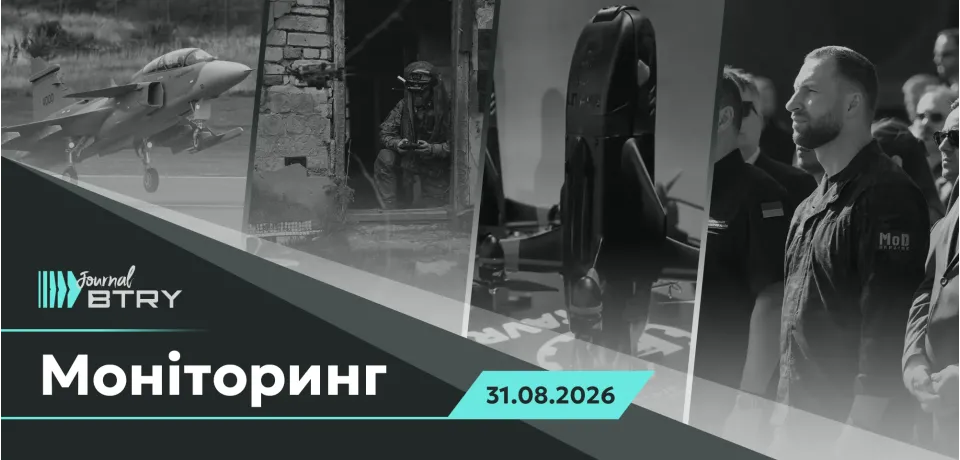
31/08/2026
Top News for the Morning of August 31, 2026. The world has finally entered a global conflict
BTRY.ENERGY offers news and articles in Ukrainian with a focus on preserving Ukrainian identity, citizens' rights, and t...
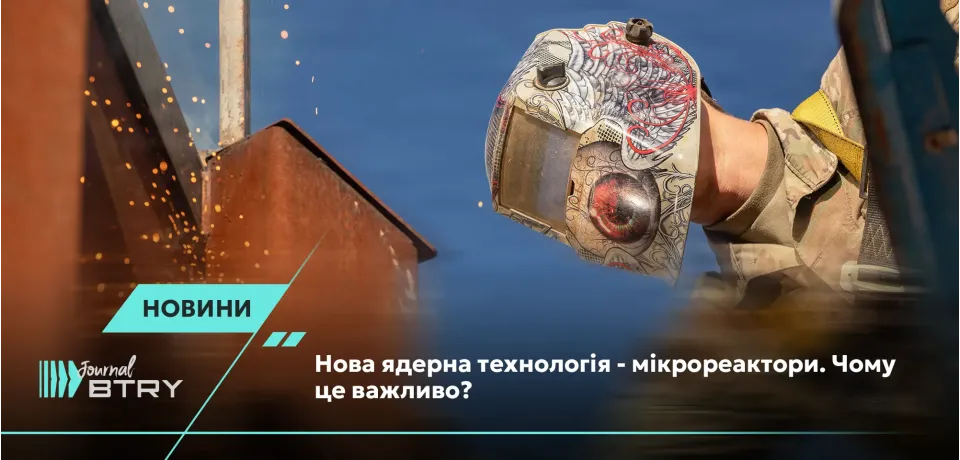
28/08/2026
A new nuclear technology: micro-reactors. Why is this important?
BTRY.ENERGY offers news and articles in Ukrainian with a focus on preserving Ukrainian identity, citizens' rights, and t...
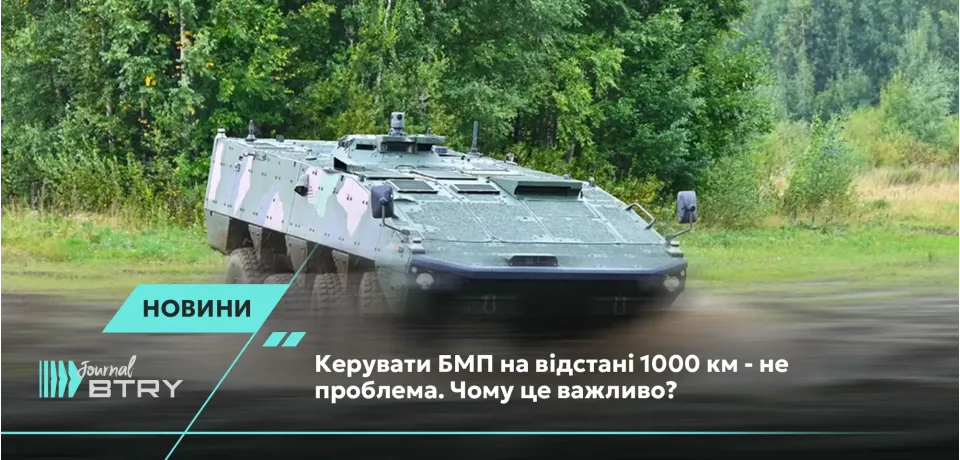
28/08/2026
Operating an infantry fighting vehicle (IFV) from a distance of 1,000 km is not a problem. Why is this important?
BTRY.ENERGY offers news and articles in Ukrainian with a focus on preserving Ukrainian identity, citizens' rights, and t...
Consultation
Need more information?
Would you like to learn more about BTRY.ENERGY or get a personal consultation - fill out the form and we will contact you


