
 Product Catalog
03.02.26
Everyone perceives a battery as just a product that powers devices. But few understand that the way a battery is built inside can be quite diverse, and this directly determines its future purpose
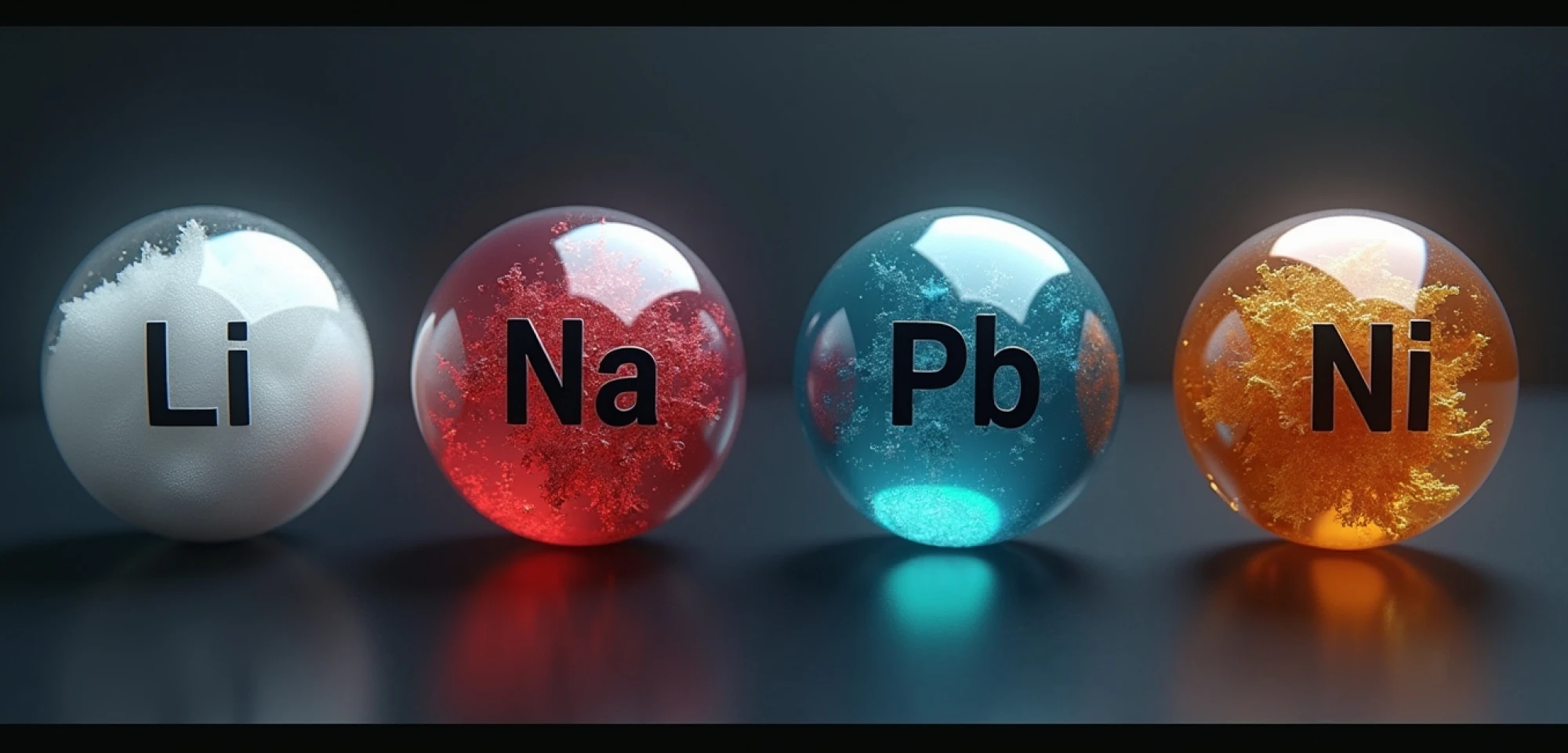
At present, various breakthroughs and technological developments are taking place in our world. This has also affected the field of batteries. If lead-acid batteries were used in the past, they are now considered outdated technology, although they are still applied. The most widespread chemistry is lithium-ion batteries (Li-ion), but even they are facing potential competitors that may eventually replace them. Let’s take a closer look at four different types of battery chemistry: lithium-ion, lead-acid, nickel-metal hydride, and sodium-ion.
Lithium-ion Batteries (Li-ion)
As already mentioned, lithium-ion batteries are currently the dominant chemistry in the market for portable electronics and electric vehicles due to their high energy density and relatively low self-discharge. A typical lithium-ion battery consists of a cathode based on lithium metal oxide (for example, LiCoO2 or LiFePO4) and a graphite anode. Depending on the cathode composition, lithium batteries provide an energy density ranging from 110 to 250 Wh/kg.
Despite their advantages, lithium-ion batteries have drawbacks. They are quite expensive to manufacture, require additional protection to prevent overheating and other dangerous situations. Moreover, they are sensitive to storage conditions and prone to aging even when not in use, which limits their overall lifespan.
Applications: smartphones, laptops, electric vehicles, and energy storage systems.
Lead-acid Batteries (Lead-acid)
Lead-acid batteries, also mentioned as the oldest among those listed, are one of the oldest and most widespread battery technologies, known for their low cost and reliability. They consist of a lead dioxide cathode, a sponge lead anode, and a sulfuric acid electrolyte. Compared to others, these batteries are distinguished by their ability to deliver high starting currents, which is why they are still used for automotive starter batteries.
However, the disadvantages of lead-acid batteries include: low energy density (30–50 Wh/kg), making them heavy and bulky; limited lifespan (200–300 cycles) compared to other battery types; toxicity, as improper recycling harms the environment, although they do have a high recycling rate (>99%).
Applications: automobiles, uninterruptible power supplies (UPS), backup power systems, and some industrial equipment.
Nickel-metal Hydride Batteries (NiMH)
Nickel-metal hydride batteries are an improved alternative to nickel-cadmium (NiCd) batteries, offering higher energy density and, since they do not contain toxic metals, being more environmentally friendly. Inside, they use a nickel hydroxide cathode and a hydrogen-absorbing alloy anode. The energy density of NiMH batteries ranges from 60 to 120 Wh/kg.
However, NiMH batteries have a high self-discharge rate and lose charge faster than lithium-ion batteries when not in use. They are also sensitive to overcharging, which can shorten their lifespan. Although their cycle life is higher than that of lead-acid batteries, they still lag behind Li-ion batteries.
Applications: hybrid cars (e.g., Toyota Prius), rechargeable AA/AAA batteries, and medical equipment.
Sodium-ion Batteries (Na-ion)
Sodium-ion batteries are a new, promising technology that has only recently begun to gain momentum, with their main advantage being the low cost of raw materials, particularly sodium, which is much more abundant than lithium. Their main competition is lithium batteries, as they operate on a similar principle, but the charge carriers are sodium ions (Na+). Cathodes are often made from layered oxides or Prussian blue analogues, while anodes typically use hard carbon.
Another advantage of Na-ion batteries is increased safety, since they can be fully discharged to 0 V for transportation. Additionally, they perform well at low temperatures. However, their energy density (75–160 Wh/kg) is currently lower. It is expected that sodium-ion batteries will be rapidly commercialized for budget electric vehicles and energy storage systems.
Different, but All Batteries
We have shown you the diversity in the world of batteries. Currently, there are established technologies on the market, but older ones are still in use, and new directions are emerging.
Personally, we now use lithium-ion chemistry, for example, in FPV batteries, as well as Li-NMC variants for batteries in EW and SIGINT systems. Of course, we`re monitoring new technologies and will implement them when necessary.
News and Reviews


01/09/2026
Top News for the Morning of September 1, 2026. Russia is using tactics of attrition against Kyiv
BTRY.ENERGY offers news and articles in Ukrainian with a focus on preserving Ukrainian identity, citizens' rights, and t...
31/08/2026
Pentagon: Arsenal to be expanded
BTRY.ENERGY offers news and articles in Ukrainian with a focus on preserving Ukrainian identity, citizens' rights, and t...
31/08/2026
Three major American publications focus on Ukraine. Why does this matter?
BTRY.ENERGY offers news and articles in Ukrainian with a focus on preserving Ukrainian identity, citizens' rights, and t...

31/08/2026
Top News for the Morning of August 31, 2026. The world has finally entered a global conflict
BTRY.ENERGY offers news and articles in Ukrainian with a focus on preserving Ukrainian identity, citizens' rights, and t...
28/08/2026
A new nuclear technology: micro-reactors. Why is this important?
BTRY.ENERGY offers news and articles in Ukrainian with a focus on preserving Ukrainian identity, citizens' rights, and t...
28/08/2026
Operating an infantry fighting vehicle (IFV) from a distance of 1,000 km is not a problem. Why is this important?
BTRY.ENERGY offers news and articles in Ukrainian with a focus on preserving Ukrainian identity, citizens' rights, and t...
Consultation
Need more information?
Would you like to learn more about BTRY.ENERGY or get a personal consultation - fill out the form and we will contact you


