
 Product Catalog
08.09.25
The right battery choice is the key to reliable operation of drones, EW systems, laser sights, and any other equipment in challenging conditions.
Choosing a battery for various devices becomes a real challenge. Each type of equipment has its own requirements for power, capacity, size, and reliability of the battery. From drones to electronic warfare (EW) devices and laser sights — each of them has its unique requirements.
Tips for choosing a battery for drones, EW/SIGINT, and laser sights
The choice of a battery for drones is of great importance. Before purchasing, you should pay attention to the main characteristics of the device:
- For light drones, batteries with a capacity of 500–1000 mAh are sufficient, while professional ones require a capacity of over 5000 mAh. It is important to remember that the weight of the battery affects the drone’s flight time.
- Most drones use batteries with a voltage of 7.4V (2S) or 11.1V (3S), while professional models can reach up to 22.2V (6S).
- The battery must fit the size of your drone perfectly to avoid installation problems.
- Lithium-polymer (Li-Po) batteries are the most common due to their high energy density.
Carefully study all the specifications to achieve maximum performance.
Electronic warfare devices require special attention when choosing a battery, since their operation is often associated with extreme conditions:
- Batteries must have high power and be resistant to voltage fluctuations.
- EW/SIGINT devices require high-capacity batteries to ensure long-term operation without recharging.
- Batteries may be equipped with protection against short circuits, overheating, and overload.
Laser sights are important for shooting accuracy and reliability, so choosing a battery also plays a key role:
- Batteries must be small in size and weight so as not to complicate the use of the sight.
- It is important to choose a device that will provide long operation of the sight without frequent recharging.
- Lithium-ion (Li-ion) batteries are used more often due to their high energy density and compactness.
When choosing, you should also consider the strengths of a particular model to select the optimal option. Let’s look at the main types of devices and their features:
- Lithium-polymer (Li-Po) have high energy density and light weight, but require careful maintenance to avoid damage.
- Lithium-ion (Li-ion) — energy density, long service life, and stability make them an ideal choice for many devices.
- Nickel-metal hydride (NiMH) — high reliability and durability, but lower energy capacity compared to Li-ion and Li-Po.
Also consider quality and reliability. Here are the criteria by which you can choose a battery for different needs:
- Give preference to batteries from well-known and trusted brands such as Lishen, Molices, Samsung, EVE. Trust in these brands indicates their reliability.
- Always read user reviews and ratings on specialized forums and websites. Pay special attention to expert evaluations.
- Make sure that the batteries have the necessary quality and safety certificates.
- Choose devices that have been tested for resistance to temperature fluctuations, vibration, and impacts.
The correct choice of a battery depends on the specific requirements of your device. Taking into account the main parameters and characteristics, you will be able to find the optimal option to ensure its long-term and reliable operation.
News and Reviews


01/09/2026
Top News for the Morning of September 1, 2026. Russia is using tactics of attrition against Kyiv
BTRY.ENERGY offers news and articles in Ukrainian with a focus on preserving Ukrainian identity, citizens' rights, and t...
31/08/2026
Pentagon: Arsenal to be expanded
BTRY.ENERGY offers news and articles in Ukrainian with a focus on preserving Ukrainian identity, citizens' rights, and t...
31/08/2026
Three major American publications focus on Ukraine. Why does this matter?
BTRY.ENERGY offers news and articles in Ukrainian with a focus on preserving Ukrainian identity, citizens' rights, and t...
31/08/2026
Top News for the Morning of August 31, 2026. The world has finally entered a global conflict
BTRY.ENERGY offers news and articles in Ukrainian with a focus on preserving Ukrainian identity, citizens' rights, and t...
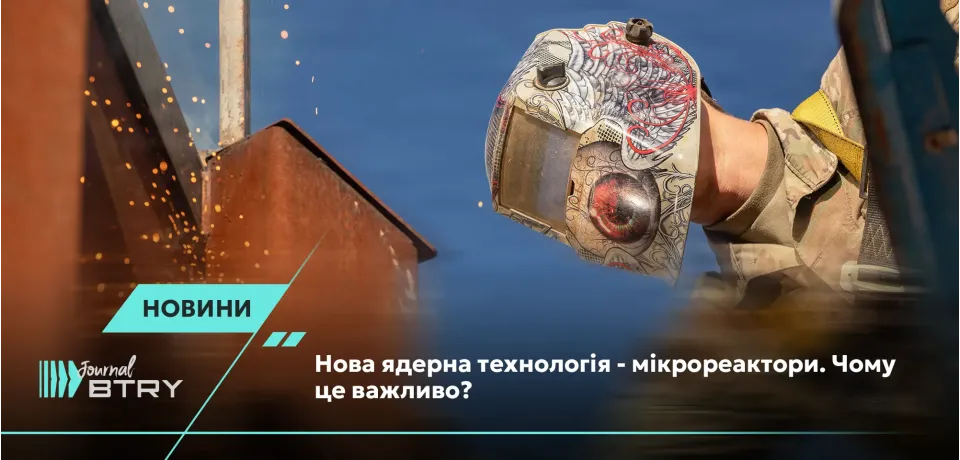
28/08/2026
A new nuclear technology: micro-reactors. Why is this important?
BTRY.ENERGY offers news and articles in Ukrainian with a focus on preserving Ukrainian identity, citizens' rights, and t...
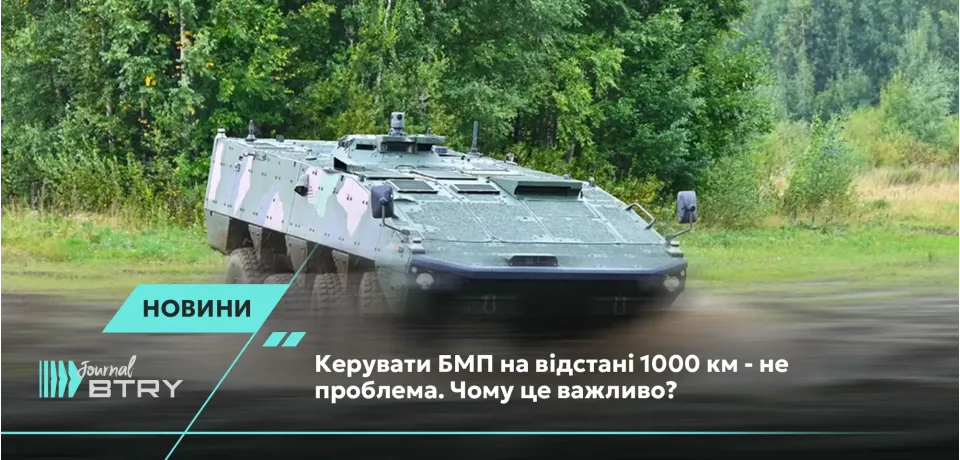
28/08/2026
Operating an infantry fighting vehicle (IFV) from a distance of 1,000 km is not a problem. Why is this important?
BTRY.ENERGY offers news and articles in Ukrainian with a focus on preserving Ukrainian identity, citizens' rights, and t...
Consultation
Need more information?
Would you like to learn more about BTRY.ENERGY or get a personal consultation - fill out the form and we will contact you


