
 Product Catalog
05.12.25
Everything about the manufacturer Tianjin Lishen Battery Joint-Stock Co., Ltd. When and where it was founded. What advantages it can boast and what products it offers

Tianjin Lishen Battery Joint-Stock Co., Ltd., better known as Lishen Battery, is one of the world’s leading manufacturers of lithium-ion battery cells. Founded in China, it has played a key role in the development of the national lithium battery industry.
Company History and Profile
Lishen Battery was founded on December 25, 1997, in Tianjin, China. It became the first company in China engaged in the research, development, and production of lithium-ion batteries. The company is a state-owned national high-tech enterprise.
Since its founding, Lishen has focused on providing comprehensive power solutions, covering a wide range of applications—from consumer electronics to electric vehicles and energy storage systems.
- Founded: December 25, 1997.
- Headquarters: Tianjin, China.
- Status: State-owned national high-tech enterprise.
- Key Achievements: One of the first companies to supply lithium cells to global giants such as Motorola, Samsung, and Apple Inc.
- Production Capacity: Lishen’s annual production capacity reaches tens of gigawatt-hours (GWh), according to various sources — up to 31 GWh.
Product Portfolio and Battery Models
Lishen Battery manufactures lithium-ion cells in three main form factors, each oriented toward a specific market segment.
Cylindrical Batteries
This form factor is one of the most versatile and is used both in consumer electronics and electric vehicles.
- Formats: Includes popular models such as 18650 and 21700 (e.g., LR2170LA, LR2170SZ).
- Advantages: High energy density (up to 304 Wh/kg), high discharge rate (up to 10C), fast charging capability (up to 10C), high safety, excellent low-temperature performance.
- Applications: Electric vehicles (four-wheel and two-wheel), power tools, garden equipment, vacuum cleaners, robot vacuums, fast-charging power banks, portable energy storage systems.
Polymer Batteries
These cells, also known as lithium-polymer (Li-Po), feature a flexible form factor and high specific energy.
- Advantages: Very high gravimetric energy density (up to 350 Wh/kg), long cycle life (up to 1200 cycles), support for fast charging (3–10C), wide operating temperature range.
- Chemistry: Supports multimaterial systems — LCO, NCM, LFP and LMO.
- Applications: Branded electronics, wearable devices, mobile phones, laptops, drones, mobile power banks.
Prismatic Batteries
These cells have a rigid rectangular casing and are often used in larger systems.
- Advantages: Low cost, high strength (the casing is resistant to pressure and deformation), mature production process.
- Applications: Mobile power banks, drones, and widely used in energy storage systems (ESS) and electric vehicles (although the website lists only mobile devices and drones).
Key Technologies and Advantages
Lishen Battery positions itself as a supplier of comprehensive solutions based on advanced technologies:
- Multimaterial System: The company works with various cathode materials (LCO, NCM, LFP, LMO), allowing optimization of cells for specific customer requirements (energy density, power, safety, cost).
- High Charging/Discharging Rates: Development of cells capable of handling high currents (up to 10C charging and 33C pulse discharging), which is critical for power tools and electric vehicles.
- Extreme Temperature Performance: Capability of certain cylindrical and polymer cells to operate in harsh climatic conditions.
- Certification and Safety: Lishen products hold numerous international safety certifications, including GB, UL1642, IEC62133, CTIA, PSE and UN38.3.
Lishen Battery: 26 Years of Innovation
Lishen Battery is a foundational player in the global lithium-ion battery market. Its 26 years of experience, status as China’s first lithium-ion battery manufacturer, and cooperation with major global brands (Apple, Samsung, Motorola) confirm its technological maturity and reliability. The company offers a diversified product portfolio across three major form factors (polymer, cylindrical, prismatic), enabling it to meet the needs of a wide range of industries—from advanced consumer electronics to powerful systems for electric vehicles and energy storage.
News and Reviews


01/09/2026
Top News for the Morning of September 1, 2026. Russia is using tactics of attrition against Kyiv
BTRY.ENERGY offers news and articles in Ukrainian with a focus on preserving Ukrainian identity, citizens' rights, and t...
31/08/2026
Pentagon: Arsenal to be expanded
BTRY.ENERGY offers news and articles in Ukrainian with a focus on preserving Ukrainian identity, citizens' rights, and t...
31/08/2026
Three major American publications focus on Ukraine. Why does this matter?
BTRY.ENERGY offers news and articles in Ukrainian with a focus on preserving Ukrainian identity, citizens' rights, and t...
31/08/2026
Top News for the Morning of August 31, 2026. The world has finally entered a global conflict
BTRY.ENERGY offers news and articles in Ukrainian with a focus on preserving Ukrainian identity, citizens' rights, and t...
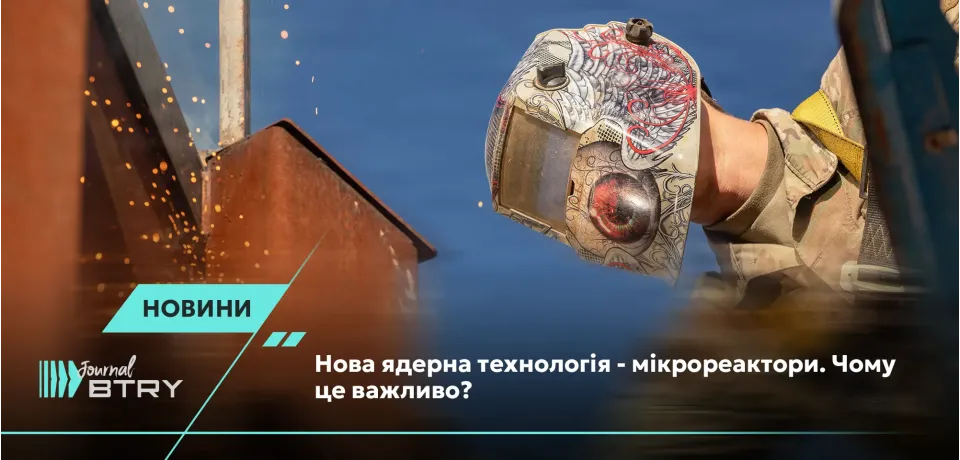
28/08/2026
A new nuclear technology: micro-reactors. Why is this important?
BTRY.ENERGY offers news and articles in Ukrainian with a focus on preserving Ukrainian identity, citizens' rights, and t...
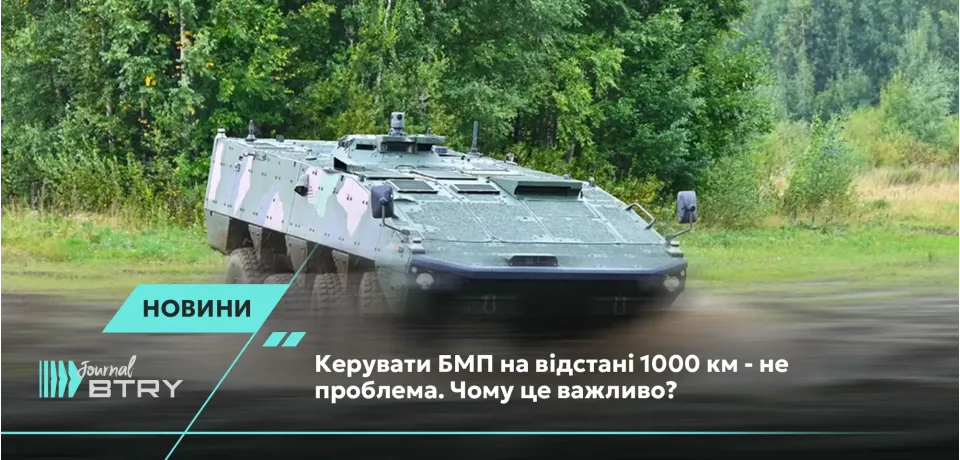
28/08/2026
Operating an infantry fighting vehicle (IFV) from a distance of 1,000 km is not a problem. Why is this important?
BTRY.ENERGY offers news and articles in Ukrainian with a focus on preserving Ukrainian identity, citizens' rights, and t...
Consultation
Need more information?
Would you like to learn more about BTRY.ENERGY or get a personal consultation - fill out the form and we will contact you


