
 Product Catalog
13.02.26
The state military-technical policy, focused on maximizing the scaling of effective drones, must rely on a short law and long-term industrial will

Ukraine already has a strong foundation for mass drone production, but the key breakthrough lies in changing state policy: instead of purchasing individual models, a system of rapid scaling and constant renewal is needed. The effectiveness of drones has grown so much that their share in enemy fire damage increased from 4% to 33%, and more than half of the attacks in 2025 reached strategic targets. Companies such as SkyFall, Fire Point, AeroMotors, and Vyriy drone have already established production of critical components — from engines to cameras — but remain dependent on Chinese magnets and matrices. A two-contour model is proposed: rapid evolution of innovations and serial scaling to avoid technological stagnation. The decisive factor is not the frames but the “intelligence” — control systems, communication, navigation, and artificial intelligence. Mass production is possible through the division into “consumables” (basic components centrally purchased by the state and provided to manufacturers) and “capabilities” (the competitive sphere of private startups). This reduces the cost of a drone by 30–40%, ensures repairability on the front line, and supports the Ukrainian economy. The key instrument should be a short framework law that recognizes drones as expendable munitions and launches mechanisms for rapid transition from testing to series production. The state must license intellectual solutions from private developers with royalty payments to preserve competition and stimulate innovation. New factories are already operating, and now updated rules of the game are needed — UAVs recognized as munitions, the GFE model for components, and a royalty system for innovators, opening the path to producing millions of drones.
Read the full article [IN UKRAINIAN]
News and Reviews


01/09/2026
Top News for the Morning of September 1, 2026. Russia is using tactics of attrition against Kyiv
BTRY.ENERGY offers news and articles in Ukrainian with a focus on preserving Ukrainian identity, citizens' rights, and t...
31/08/2026
Pentagon: Arsenal to be expanded
BTRY.ENERGY offers news and articles in Ukrainian with a focus on preserving Ukrainian identity, citizens' rights, and t...
31/08/2026
Three major American publications focus on Ukraine. Why does this matter?
BTRY.ENERGY offers news and articles in Ukrainian with a focus on preserving Ukrainian identity, citizens' rights, and t...
31/08/2026
Top News for the Morning of August 31, 2026. The world has finally entered a global conflict
BTRY.ENERGY offers news and articles in Ukrainian with a focus on preserving Ukrainian identity, citizens' rights, and t...
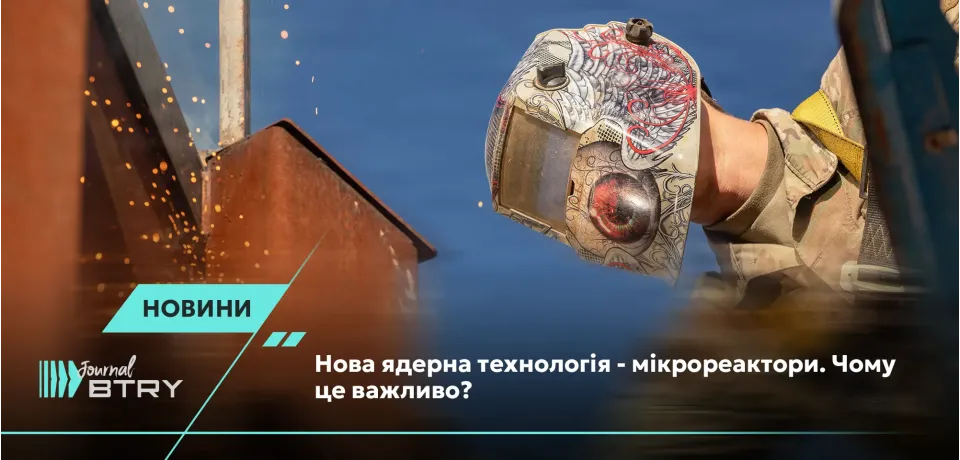
28/08/2026
A new nuclear technology: micro-reactors. Why is this important?
BTRY.ENERGY offers news and articles in Ukrainian with a focus on preserving Ukrainian identity, citizens' rights, and t...
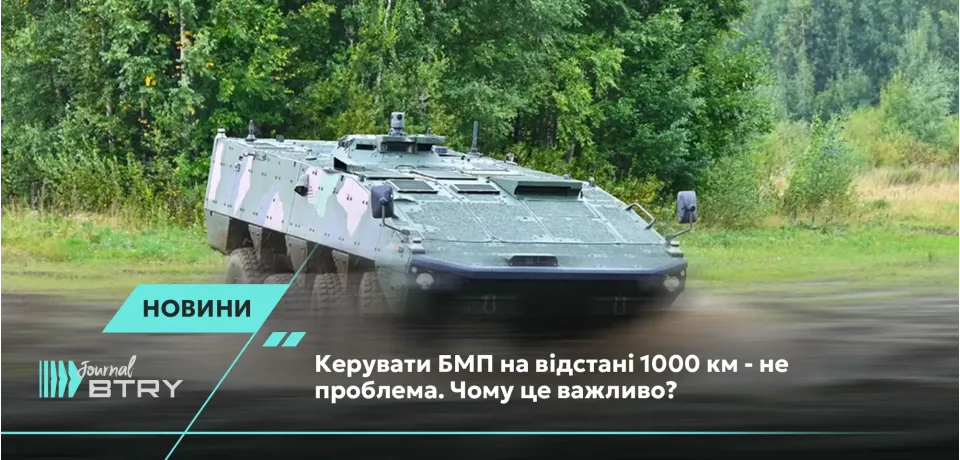
28/08/2026
Operating an infantry fighting vehicle (IFV) from a distance of 1,000 km is not a problem. Why is this important?
BTRY.ENERGY offers news and articles in Ukrainian with a focus on preserving Ukrainian identity, citizens' rights, and t...
Consultation
Need more information?
Would you like to learn more about BTRY.ENERGY or get a personal consultation - fill out the form and we will contact you


