
 Product Catalog
24.04.25
The world is increasingly influenced by the war in Ukraine, prompting national analytical institutions to intensify their analysis of modern battlefield tactics.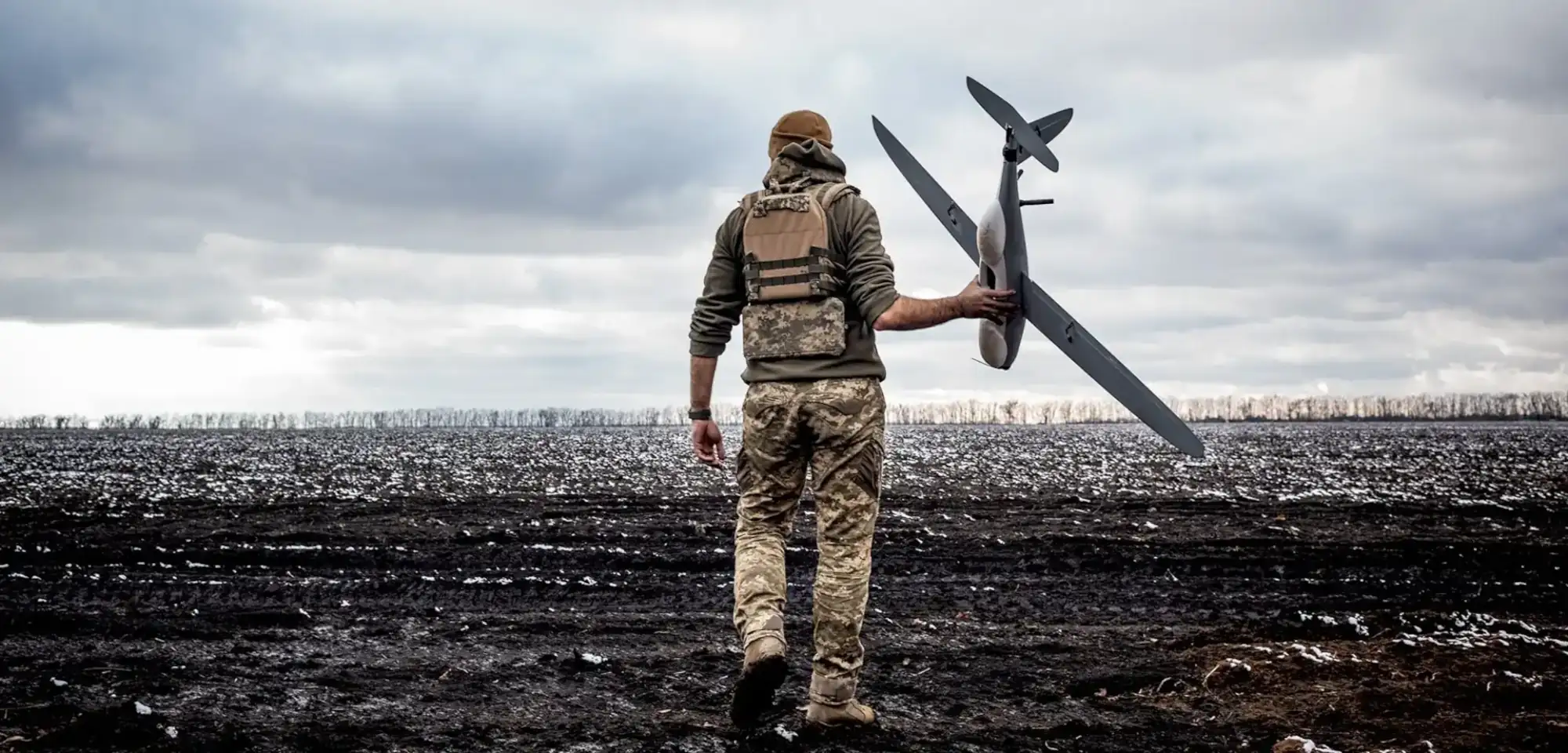
Impact of the War in Ukraine on the Development of Armies and Weaponry
The British Armed Forces undoubtedly lead among Euro-Atlantic countries in integrating unmanned aerial systems (UAS) into contemporary tactics based on Ukraine’s experience. Notably, on April 18, 2025, the Royal Armoured Corps published a photo on X showing a Royal Lancers soldier operating a small UAS (sUAS). This marks a new trend in British military strategy—employing unmanned aerial complexes (UACs) as a core component of modern ground warfare. The British Army acknowledges that 21st-century battlefields are increasingly shaped not only by firepower and maneuverability, but by information dominance and the precision of drones. Significantly, the military publication Army Recognition described FPV drones as “small, fast, and hard to detect,” and labeled them the “poor man’s precision strike system,” capable of destroying tanks, artillery positions, and command posts. In response, the British Army is ramping up investments in drone technology, including counter-UAS electronic warfare, autonomous navigation, and swarm tactics, positioning itself to confront both peer and hybrid threats.
Amid these developments, April reports from the U.S. (as of April 19, 2025) revealed the loss of six MQ-9 Reaper drones over the previous six weeks. Houthi forces shot down the reconnaissance-strike drones over Yemen starting March 3, each valued at approximately $30 million. This starkly illustrates how modern warfare remains combined-arms in nature, where inexpensive mass-produced weapons can deplete even the most expensive, high-tech systems.
Ukraine has similar experience. In 2024, a Russian helicopter was destroyed by an unspecified drone. Then, in early April 2025, a Tu-22M3 bomber—worth about $100 million—was taken out. Subsequently, a Russian Forpost-R combat-reconnaissance UAV was downed by a Ukrainian anti-air drone, likely marking the first such interception. The key takeaway: the intercept occurred at an altitude of approximately 4 km, whereas previous missions were conducted at 1–1.5 km.
Meanwhile, the U.S. is testing the Coyote LE SR drone for use in air defense. In March 2025, a Bradley IFV launched it from its BGM-71 TOW missile system. The Coyote is positioned as a low-cost anti-drone solution, though the Coyote 2C variant costs $125,000 per unit.
Russia is also working to integrate drones into its air defense ecosystem. In late March 2025, the FPV drone “Sifa” was introduced as an interceptor for heavy drones and helicopters, dubbed an “analogue of air defense systems,” boasting a speed of 225 km/h.
Trends in the Development of Unmanned Aerial Complexes (UACs)
Matching UAV cost to quality is becoming more critical, even for prominent Western manufacturers. In mid-April 2025, a debate emerged around Ukraine outperforming the West in producing high-quality, low-cost drones. Criticism was aimed at German drones supplied by Helsing. Bloomberg quoted a Ukrainian military servicemember: “We’re talking about a product made from cheap components, marketed as advanced technology,” said a soldier from the Ukrainian Armed Forces' Drone Systems Command whose unit received the 120 HF-1 UAS in February. “I can assure you—I dismantled it.” He claimed the drone is worth no more than 100,000 UAH (~€2,200) but was sold for €16,700—an unjustifiably high price. Ukrainian engineers are increasingly challenging global players with better, cheaper UAV alternatives.
Of particular importance is the announcement that the first 1,000 fully Ukrainian-made drones have been unveiled. This marks a vital step in developing a domestic component base to ensure continuous military supply and future export success. Minister of Strategic Industries H. Smetanin reported the production of 2.2 million FPV drones in 2024, emphasizing not just quantity but component localization — including motors, ignition boards, and now, Ukrainian-assembled FPV cameras.
On April 18, just before its second anniversary, the Brave1 tech cluster conducted trials of small FPV bombers for resistance to EW systems, payload capacity, and usability. Over a dozen domestic alternatives to Chinese Mavic drones were tested. Drones had to fly 10 km under electronic warfare, drop a munition on target, and return. Fourteen FPV bombers ranging from 10–18 inches participated, several completing the mission successfully. Eight Ukrainian contenders—including Kruk, Yautja, PD10ND, “Roksolyana,” “Ukropter,” ZOOM, Ptakh-S, and “Shmavik”—aim to replace Chinese UAVs.
In April, the Drone Systems Command reported that Nemesis drones destroyed 282 howitzers and cannons in March—17% of the total 1,644 Russian artillery systems eliminated that month. This demonstrates the exceptional effectiveness of Nemesis-class UACs, which have been conducting missions up to 20 km behind enemy lines since June 2024.
Another milestone came with the use of a “mother drone” by the Drone Systems Command in April. This fixed-wing UAV carried two FPV kamikaze drones into Russia’s Kursk region. The mothership served as a signal relay. The system’s range was 60 km, and the FPVs carried 400 g warheads—sufficient for unarmored targets like radar systems or SAMs, though not for heavy armor or bunkers.
Meanwhile, mass production has begun on a new drone called “Shahed Catcher,” reportedly the most successful interceptor of Russian Shahed drones. According to developers, this UAV has already downed over 20 such drones in the last two months.
Ukraine’s defense industry has also localized Deep Strike drones by over 50%, indicating major progress in component production. Compared to 2022, Deep Strike UAV output has increased 22-fold.
Additionally, 11 Ukrainian enterprises are now manufacturing fiber-optic drones.
UGV Development: What’s New
Significant developments have also occurred in ground robotic systems (UGVs). In mid-April, more than 70 UGVs underwent large-scale testing in Ukraine, organized by Brave1 and involving about 50 manufacturers. Tests included EW exposure at varying frequencies. Key challenges remain: improving communication range and terrain handling. However, UGV production has increased 15-fold since 2022. Back then, just three companies offered around 10 UGV models; now over 40 NATO-coded designs exist. UGVs are playing an increasingly important role in reconnaissance, logistics, demining-mining, and as autonomous or remote-operated combat modules. As of April 1, the Ministry of Defense had signed 31 UGV procurement contracts worth 6 billion UAH, expecting delivery of around 15,000 UGVs to the Armed Forces in 2025.
Brave1 notes that although 50 UGV models are officially approved for military use, only 20–30% are consistently used at the front, as most are either technically unready or too specialized. Currently, 250 UGV models are registered on the Brave1 platform. “Sixty percent of the market offering is still raw. Manufacturers often don’t understand the exact characteristics robots need on the front lines,” said "Happy," a platoon commander from the “Khartia” unit, aptly summarizing the challenges of UGV deployment.
Electronic Warfare Systems: Latest Updates
In April, reports emerged that Ukraine had reduced the effectiveness of Russian air-dropped bombs with UMPC kits. According to Commander-in-Chief O. Syrskyi, this was achieved using electronic warfare systems that disrupted enemy guidance.
By late April, over 50 EW tools had been NATO-coded, said Brave1 director N. Kushnerska. “Our first focus was on ground robotic systems. Today, over 50 NATO-coded developments are used in the field—for logistics, evacuation, combat missions, mining/demining, and engineering tasks.” Among the notable UGVs: the “Shablya” turret, the “Rys” platform, their hybrid system, the “Liut” combat robot, the D-21-11 turret, DevDroid’s reconnaissance bots, the TerMIT logistics/evacuation platform, and the Volia-E ground drone.
Another emerging domain is Ukrainian trench EW systems. Over 50 EW tools are now coded, developed by manufacturers like Kvertus, UNVAWE, Rebel Group, mudro.tech, and Abakus Tech.
Roughly 90% of drone and UGV manufacturers are active participants in the Brave1 platform.
News and Reviews


01/09/2026
Top News for the Morning of September 1, 2026. Russia is using tactics of attrition against Kyiv
BTRY.ENERGY offers news and articles in Ukrainian with a focus on preserving Ukrainian identity, citizens' rights, and t...
31/08/2026
Pentagon: Arsenal to be expanded
BTRY.ENERGY offers news and articles in Ukrainian with a focus on preserving Ukrainian identity, citizens' rights, and t...
31/08/2026
Three major American publications focus on Ukraine. Why does this matter?
BTRY.ENERGY offers news and articles in Ukrainian with a focus on preserving Ukrainian identity, citizens' rights, and t...
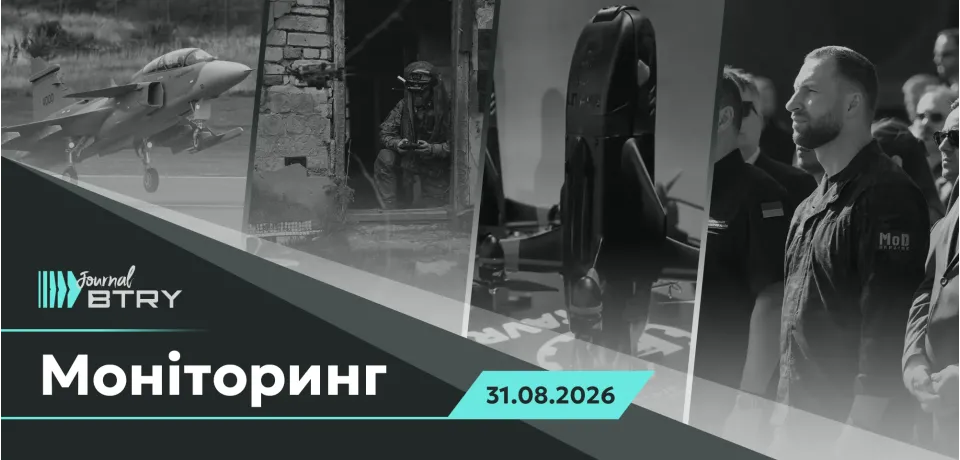
31/08/2026
Top News for the Morning of August 31, 2026. The world has finally entered a global conflict
BTRY.ENERGY offers news and articles in Ukrainian with a focus on preserving Ukrainian identity, citizens' rights, and t...
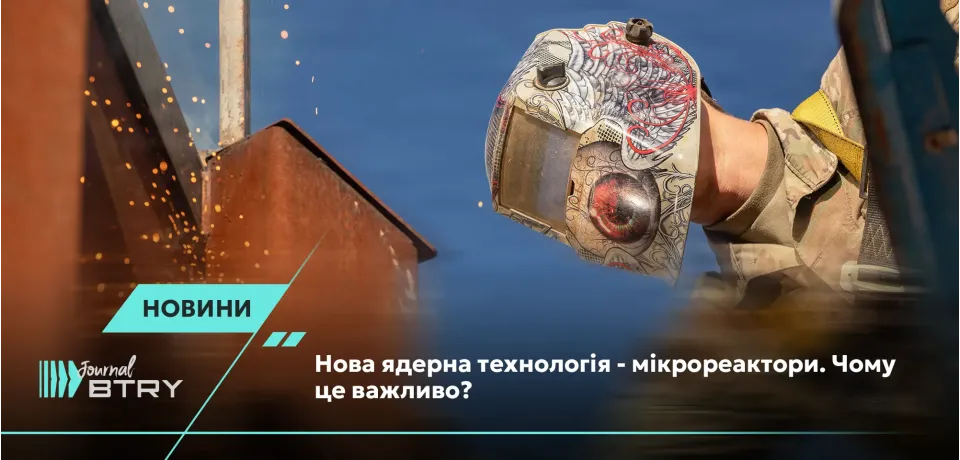
28/08/2026
A new nuclear technology: micro-reactors. Why is this important?
BTRY.ENERGY offers news and articles in Ukrainian with a focus on preserving Ukrainian identity, citizens' rights, and t...
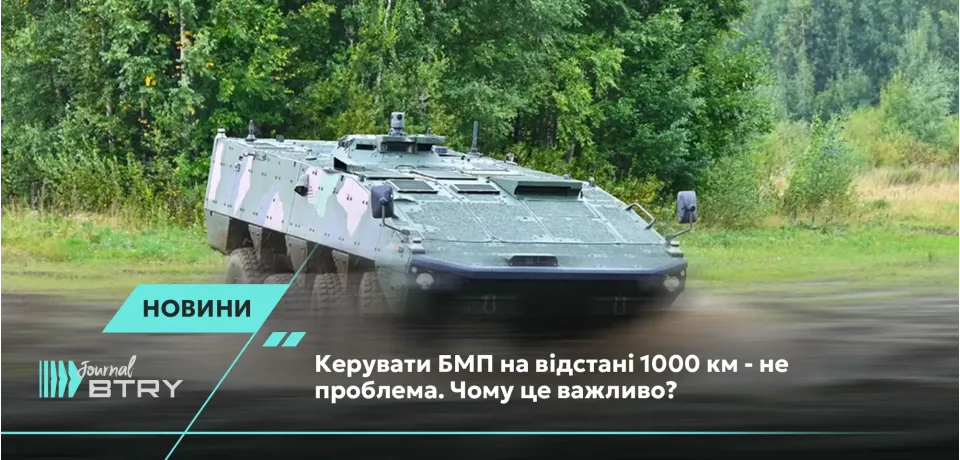
28/08/2026
Operating an infantry fighting vehicle (IFV) from a distance of 1,000 km is not a problem. Why is this important?
BTRY.ENERGY offers news and articles in Ukrainian with a focus on preserving Ukrainian identity, citizens' rights, and t...
Consultation
Need more information?
Would you like to learn more about BTRY.ENERGY or get a personal consultation - fill out the form and we will contact you


