
 Product Catalog
30.11.25
The war in Ukraine and the related development of unmanned robotic platforms already allow us to speak of a “drone synergy,” which is becoming a decisive factor in countering modern threats

In November 2025, the development of unmanned systems demonstrated a new level of “drone synergy”: Ukrainian naval drones Magura V7 for the first time destroyed a Russian Su‑30 with an R‑73 missile, while the company “General Chereshnya” introduced interceptor drones capable of downing larger targets. The United States announced plans to purchase up to one million UAVs annually, while the French company Atreyd is testing its “Drone Wall” system in Ukraine, Germany’s Diehl tested the Cicada air‑defense drone, and Israel’s Rafael unveiled the L‑SPIKE 1x. The European company Destinus showcased the Hornet system, and PGZ (Poland) together with Frankenburg Technologies (Estonia) signed an agreement on joint production. In Ukraine, serial production of the Octopus drone for intercepting Shahed drones has begun, along with mass production of STING and domestic analogues of DJI Mavic; the company M‑Fly raised $1.4 million for the development of a camera stabilizer. In the field of ground robotic complexes, ARX Robotics moved part of its Gereon RCS production to Ukraine, while local firms Ratel and Tencore are preparing mobile workshops for servicing GRCs. In the sphere of electronic warfare, the Greek company ΕΑΒ modernized the “Centaur” system, and the Ukrainian Lima complex is reportedly capable of diverting Kinzhal missiles from their course.
Read the full article [IN UKRAINIAN]
News and Reviews


01/09/2026
Top News for the Morning of September 1, 2026. Russia is using tactics of attrition against Kyiv
BTRY.ENERGY offers news and articles in Ukrainian with a focus on preserving Ukrainian identity, citizens' rights, and t...
31/08/2026
Pentagon: Arsenal to be expanded
BTRY.ENERGY offers news and articles in Ukrainian with a focus on preserving Ukrainian identity, citizens' rights, and t...
31/08/2026
Three major American publications focus on Ukraine. Why does this matter?
BTRY.ENERGY offers news and articles in Ukrainian with a focus on preserving Ukrainian identity, citizens' rights, and t...
31/08/2026
Top News for the Morning of August 31, 2026. The world has finally entered a global conflict
BTRY.ENERGY offers news and articles in Ukrainian with a focus on preserving Ukrainian identity, citizens' rights, and t...
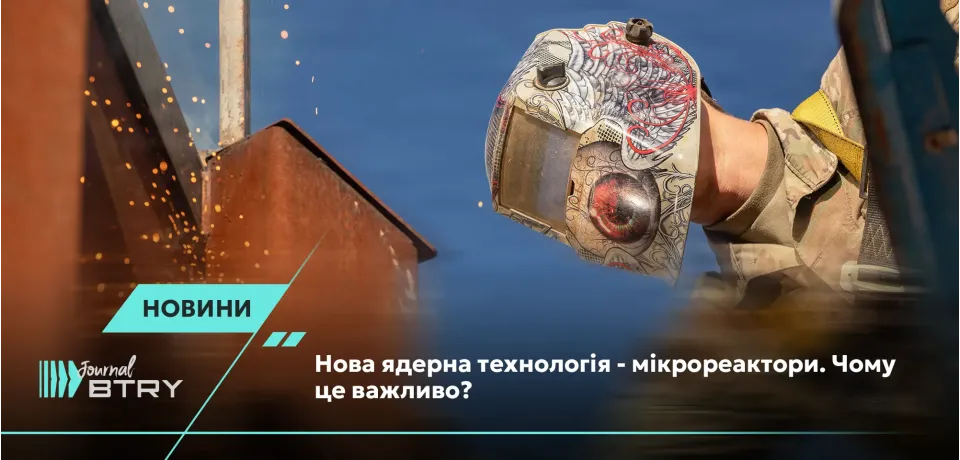
28/08/2026
A new nuclear technology: micro-reactors. Why is this important?
BTRY.ENERGY offers news and articles in Ukrainian with a focus on preserving Ukrainian identity, citizens' rights, and t...
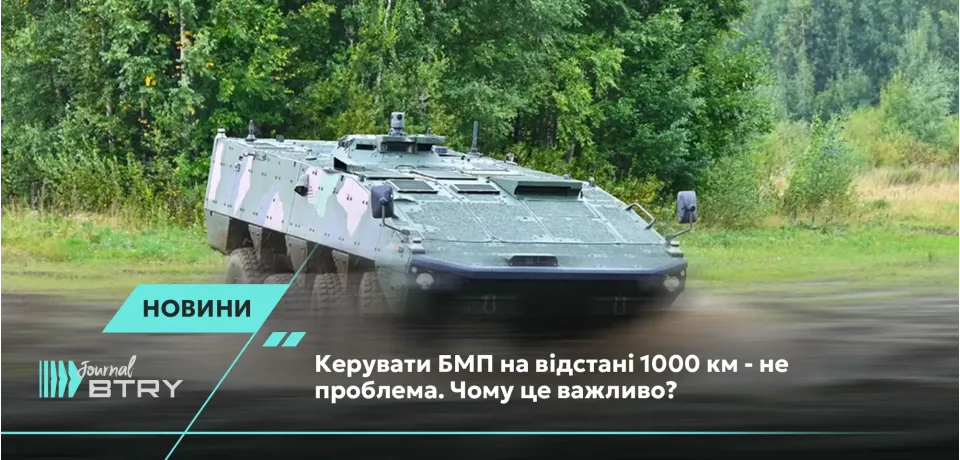
28/08/2026
Operating an infantry fighting vehicle (IFV) from a distance of 1,000 km is not a problem. Why is this important?
BTRY.ENERGY offers news and articles in Ukrainian with a focus on preserving Ukrainian identity, citizens' rights, and t...
Consultation
Need more information?
Would you like to learn more about BTRY.ENERGY or get a personal consultation - fill out the form and we will contact you


