
 Product Catalog
13.01.26
During the conflict between russia and Ukraine, drones equipped with fiber-optic reels are widely used. This technology represents a significant step forward in the development of unmanned systems, as it overcomes several critical limitations of traditional radio-controlled drones, especially under conditions of intense combat
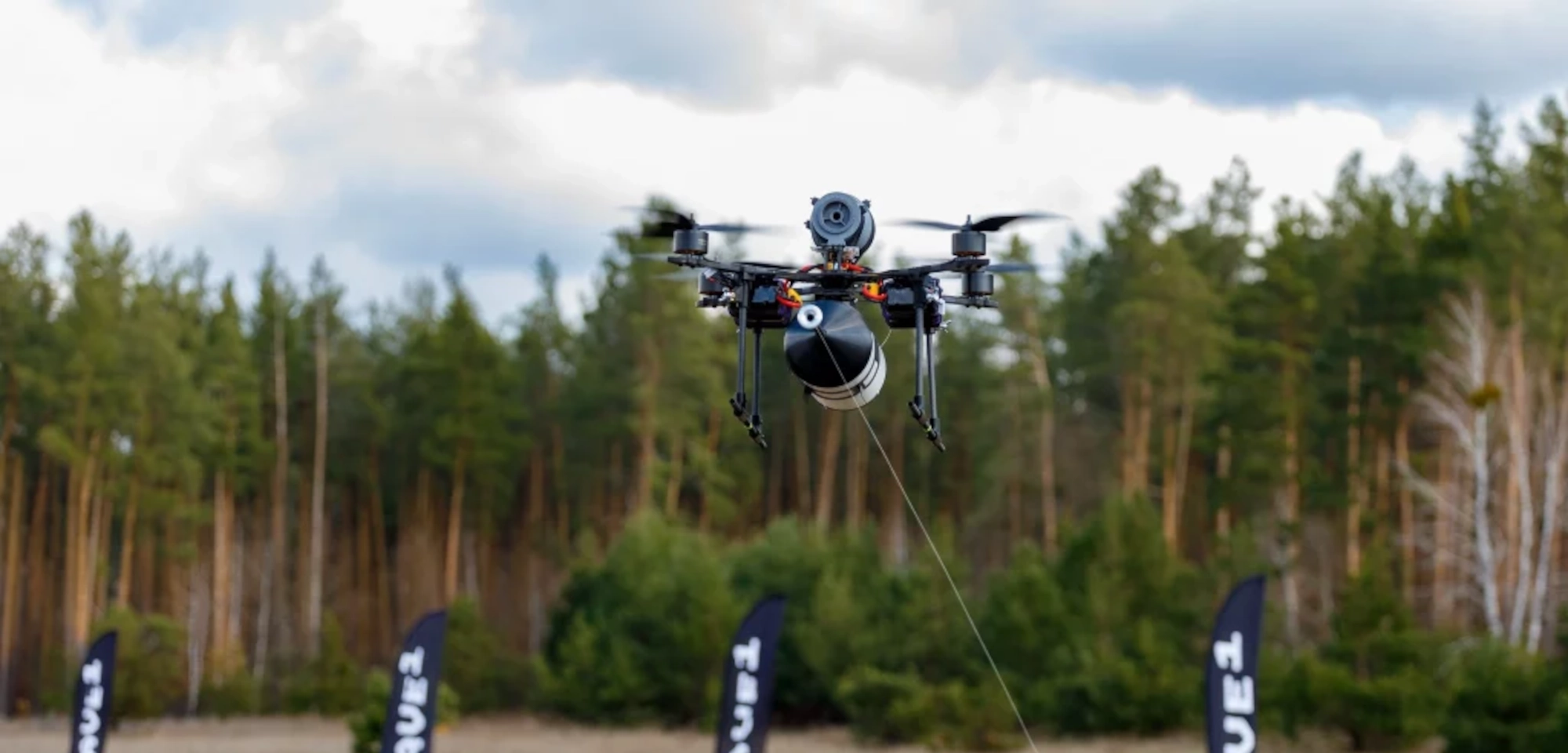
Operating Principle and Main Advantages
A drone equipped with a fiber-optic reel establishes a physical connection with the operator via a thin optical cable. Through this cable, all control commands, video signals, and telemetry data are transmitted through a direct physical channel using optical pulses instead of radio waves.
The main advantages of this system include:
- Resistance to electronic warfare (EW): Since data transmission occurs through fiber optics, drones are not affected by electronic warfare systems. This ensures that signals cannot be jammed and control over the equipment is not lost.
- Invisibility to SIGINT equipment: Without radio wave emissions, these drones are invisible to electronic reconnaissance systems, making detection and operator identification significantly more difficult.
- High-quality communication: Fiber optics provide stable, high-quality video transmission, superior to radio control, which further improves target detection and situational assessment.
- Independence from terrain: Unlike radio signals, which can be obstructed by hills, buildings, or other obstacles, fiber-optic communication is not limited by line-of-sight, ensuring stable control over long distances. The only limitation is the bending of the cable itself, but with professional handling, signal loss is rare.
- Extended battery life: Some data suggest that battery life may be prolonged since high-power radio transmitters are not required.
Reel Lengths and Their Impact
The length of the fiber-optic reel is one of the main parameters determining the drone’s operating range. When this technology was first introduced on the battlefield, coil lengths were about 10 kilometers. However, rapid technological progress now allows for much longer coils:
- Standard and extended lengths: Typical reel lengths are 10 km, 15 km, and 20 km. The Ukrainian defense-tech company “General Chereshnya” offers the “General Chereshnya OPTIX” series with reels of 15 km, 20 km, 25 km, 30 km, and 35 km, enabling more than 20 configuration options tailored to operational needs.
- Record achievement: The Ukrainian company Ptashka Drones announced the successful use of FPV drones with fiber-optic reels of 50 kilometers. This allows drones to penetrate deep behind enemy lines to strike targets.
Despite numerous advantages, increasing cable length imposes certain limitations. Although fiber-optic cables are extremely thin (about 0.23 millimeters), they add weight to the drone. The cable’s weight, especially in 50-kilometer configurations, significantly affects payload capacity, maneuverability, and the ability to carry munitions.
Usage Features and Tactical Application
Drones equipped with fiber-optic coils are used for specific missions where resistance to EW and strike precision are critical. They are employed for “surgical” strikes against high-priority targets such as tanks, air defense systems, EW equipment, and logistics routes.
Additional information on limitations and drawbacks:
- Risk of cable entanglement: Cables can get tangled in trees, power lines, or other obstacles, leading to drone loss.
- Limited maneuverability: The physical cable connecting the drone to the operator, along with its weight, restricts mobility, making the drone more vulnerable to small arms fire.
- Single-use nature: After mission completion, the cable remains on the ground, making these drones essentially disposable.
- Technical solutions: To prevent tangling and knot formation, every millimeter of the fiber-optic cable can be coated with a special liquid.
Production and Countermeasures
Both Ukraine and russia are actively developing and deploying this technology. In Ukraine, more than 15 companies are engaged in research and development of fiber-optic drones, while about 20 companies manufacture coils. Notable Ukrainian innovations include the “General Chereshnya OPTIX” drone and FPV systems from Ptashka Drones.
russia is also actively implementing similar systems, such as the “Molniya” drone and the “Knyaz Vandal Novgorodsky” model. According to some media reports, russia has a numerical advantage, largely due to significant optical fiber supplies from China.
Given the immunity of such drones to EW systems, countering fiber-optic drones is an extremely difficult task. Current countermeasures include:
- Mechanical destruction: Using rifles to shoot down drones, as heavy drones tethered by cables have reduced maneuverability.
- Physical barriers: Deploying special nets over roads to prevent drone flights.
- Detection: Using drone radars to identify drones connected to fiber-optic cables, which can then be targeted by other drones carrying explosives.
BTRY.ENERGY Products
We offer a range of fiber-optic reels for unmanned aerial vehicles, adaptable to various operational requirements. Reel lengths include:
- 2 kilometers
- 5 kilometers
- 10 kilometers
- 15 kilometers
- 20 kilometers
- 25 kilometers
- 30 kilometers
- 35 kilometers
- 40 kilometers
In addition to reels, we provide a compatible BTRY ground station that serves as the control center for the fiber-optic system. This station ensures stable communication between the UAV and the operator.
News and Reviews


01/09/2026
Top News for the Morning of September 1, 2026. Russia is using tactics of attrition against Kyiv
BTRY.ENERGY offers news and articles in Ukrainian with a focus on preserving Ukrainian identity, citizens' rights, and t...
31/08/2026
Pentagon: Arsenal to be expanded
BTRY.ENERGY offers news and articles in Ukrainian with a focus on preserving Ukrainian identity, citizens' rights, and t...
31/08/2026
Three major American publications focus on Ukraine. Why does this matter?
BTRY.ENERGY offers news and articles in Ukrainian with a focus on preserving Ukrainian identity, citizens' rights, and t...
31/08/2026
Top News for the Morning of August 31, 2026. The world has finally entered a global conflict
BTRY.ENERGY offers news and articles in Ukrainian with a focus on preserving Ukrainian identity, citizens' rights, and t...
28/08/2026
A new nuclear technology: micro-reactors. Why is this important?
BTRY.ENERGY offers news and articles in Ukrainian with a focus on preserving Ukrainian identity, citizens' rights, and t...
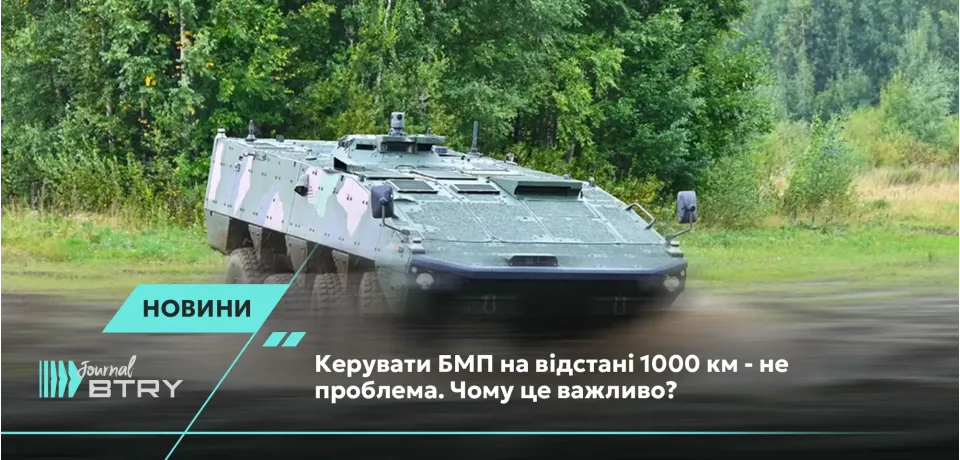
28/08/2026
Operating an infantry fighting vehicle (IFV) from a distance of 1,000 km is not a problem. Why is this important?
BTRY.ENERGY offers news and articles in Ukrainian with a focus on preserving Ukrainian identity, citizens' rights, and t...
Consultation
Need more information?
Would you like to learn more about BTRY.ENERGY or get a personal consultation - fill out the form and we will contact you


