
 Product Catalog
23.04.25
When there's no room for error, the power supply must be fail-proof. And in every case — from UAVs to mobile power stations — a specific chemistry, form factor, and trade-off applies
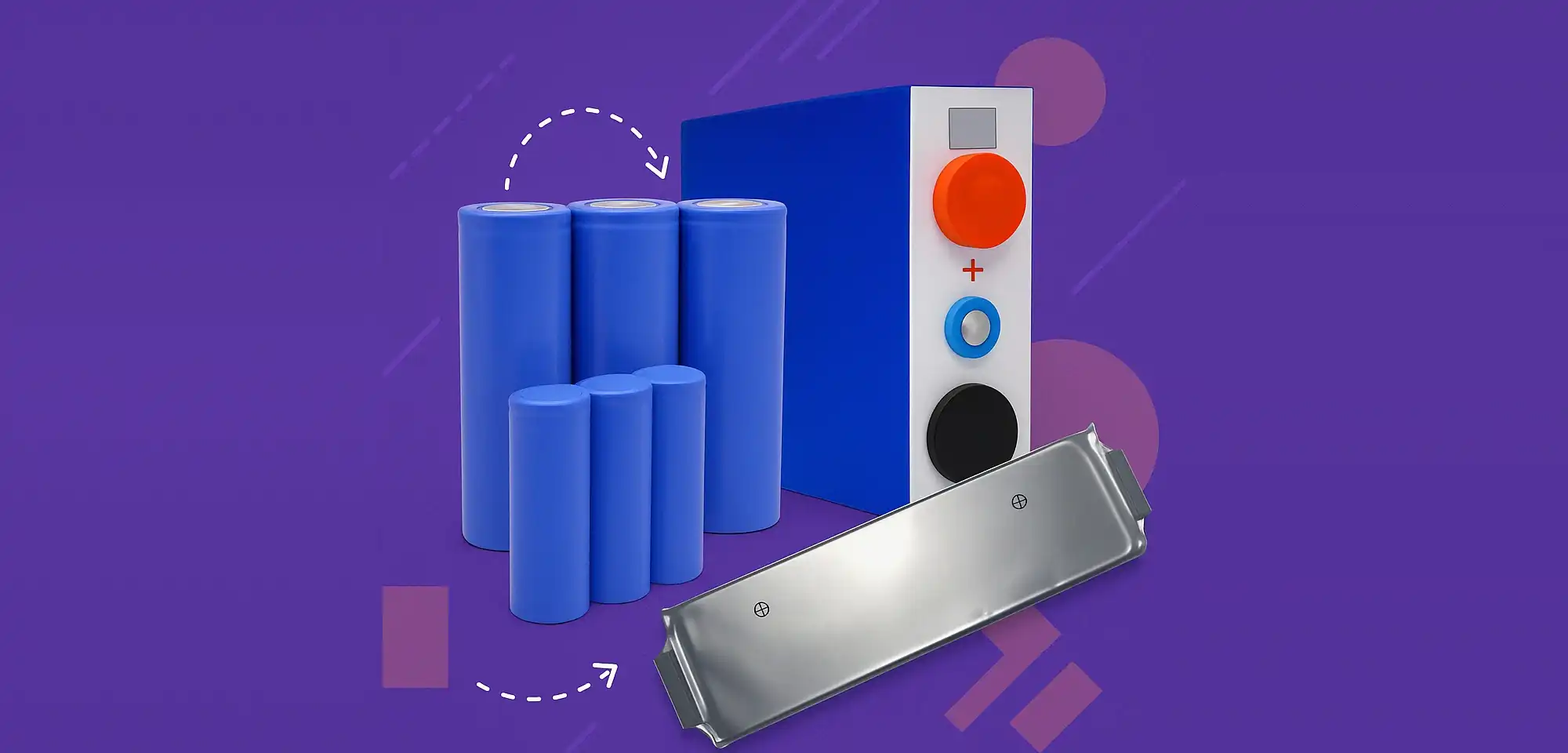
In modern warfare, it's not only weapons that win — it's the technology behind them.
Drones, UGVs, EW and communication systems, and field power supplies — all of these rely on batteries. And batteries often determine how long the system stays operational, how reliably it performs under load, and whether it can confidently complete a mission.
In practice, things differ from specs on paper. One cell overheats, another fails at a critical moment due to voltage drop, a third turns out too heavy. All these nuances are the result of a poor cell choice.
Because a battery is not just a "power pack". It's a strategic resource. And it should be treated as an essential component of combat hardware.
All Lithium, Yet Very Different: Battery Chemistries Explained
At first glance, all modern batteries seem to be just “lithium-ion.” But under this name hide several distinct chemistries, each with its own strengths and weaknesses.
Li-ion (Lithium-Ion)
There are many Li-ion batteries in different formats: 18650, 21700, 26650, 32700, and more. However, 21700 has become the most popular in military aviation. The reason is its combination of high energy density, compactness, and appropriate voltage. In standard 6s configurations (6 cells in series) using 21700 cells, the nominal voltage of 21.6V is ideal for powering FPV drones, copters, UAVs, and similar platforms.
Popular brands in this segment include Lishen, Molicel, Samsung — also used are Sony and LG.
Lishen LR2170LA, Molicel P42A — perform well under high-current loads when maximum power is needed fast.
Lishen LR2170SZ — high-capacity cell, but unsuitable for FPV drones due to poor high-current performance.
Samsung 50S — high-current cell with superior energy density, offering up to 5000mAh capacity without increasing size. This efficiency comes at a higher price, but is ideal when every extra minute of operation matters.
Li-NMC (Lithium Nickel Manganese Cobalt Oxide)
Larger and heavier, but with higher capacity. Ideal for EW, SIGINT, and communication systems where long, steady operation is more important than weight.
Li-NMC offers stable performance under continuous load and boasts a long service life.
In our military battery systems, we rely on trusted SK Innovation cells — they consistently perform well under harsh conditions.
LiFePO₄ (Lithium Iron Phosphate)
Maximum reliability and lifespan. These cells handle deep discharges, produce minimal heat, and are highly resistant to combustion.
They're used in applications requiring high energy reserves, long life, and safety — such as ground power stations, inverters, or solar-based solutions.
In this category, EVE stands out — their LF105 and LF280K cells offer exceptional stability, even under active use.
What to Choose and Why?
Li-ion: When Every Gram Matters
In FPV drones, strike UAVs, and reconnaissance systems, weight and size are critical. The lighter the drone — the faster and farther it flies, increasing its chances of evading air defense, maneuvering, and hitting the target.
Here, Samsung 50S, Molicel P42A, and Lishen LR2170LA cells are indispensable. Compact and lightweight, they deliver high power and can be combined into packs for different configurations. In such missions, every extra gram can drastically reduce flight time and success rate.
Li-NMC: When Stability and Capacity Outweigh Size
For scenarios requiring long and steady operation — like EW/SIGINT systems or UGVs — Li-NMC chemistry is ideal.
SK Innovation cells offer high capacity and hold voltage under load. This ensures equipment operates without performance drops over time. These batteries are heavier, but they are the most effective solution for stationary or vehicle-mounted EW/SIGINT systems.
LiFePO₄: When Endurance and Safety Come First
When continuous high-volume power is the priority, weight and size take a back seat. This is where LiFePO₄ cells come in — perfect for stationary charging stations, solar systems, or military-grade battery units like BASTION, which power outposts, mobile HQs, and military units.
These batteries can endure thousands of cycles and tolerate high temperatures well. When gear is deployed on position for weeks, this chemistry offers unmatched reliability.
Not Just the Frontline Needs Reliable Power
On the frontline, the right battery can be decisive: whether a drone reaches its target, an EW system holds its ground, or equipment operates without faults. But the same cells that withstand combat loads work just as well in peacetime applications.
If you have a project requiring a reliable power solution — for backup systems, autonomous lighting, field lab equipment, or even household mobile stations — Li-ion, Li-NMC, and LiFePO₄ cells can be your foundation.
We know there’s no universal battery — only the right one for the mission. That’s why our experts are always ready to help you select the best option or assemble a custom pack for your application.
News and Reviews


01/09/2026
Top News for the Morning of September 1, 2026. Russia is using tactics of attrition against Kyiv
BTRY.ENERGY offers news and articles in Ukrainian with a focus on preserving Ukrainian identity, citizens' rights, and t...
31/08/2026
Pentagon: Arsenal to be expanded
BTRY.ENERGY offers news and articles in Ukrainian with a focus on preserving Ukrainian identity, citizens' rights, and t...
31/08/2026
Three major American publications focus on Ukraine. Why does this matter?
BTRY.ENERGY offers news and articles in Ukrainian with a focus on preserving Ukrainian identity, citizens' rights, and t...
31/08/2026
Top News for the Morning of August 31, 2026. The world has finally entered a global conflict
BTRY.ENERGY offers news and articles in Ukrainian with a focus on preserving Ukrainian identity, citizens' rights, and t...
28/08/2026
A new nuclear technology: micro-reactors. Why is this important?
BTRY.ENERGY offers news and articles in Ukrainian with a focus on preserving Ukrainian identity, citizens' rights, and t...
28/08/2026
Operating an infantry fighting vehicle (IFV) from a distance of 1,000 km is not a problem. Why is this important?
BTRY.ENERGY offers news and articles in Ukrainian with a focus on preserving Ukrainian identity, citizens' rights, and t...
Consultation
Need more information?
Would you like to learn more about BTRY.ENERGY or get a personal consultation - fill out the form and we will contact you


