
 Product Catalog
12.06.25
Fiber optic reels enabled drones and UGVs to operate where everything else gets jammed and intercepted. Here’s how this technology went from early tests to real combat missions
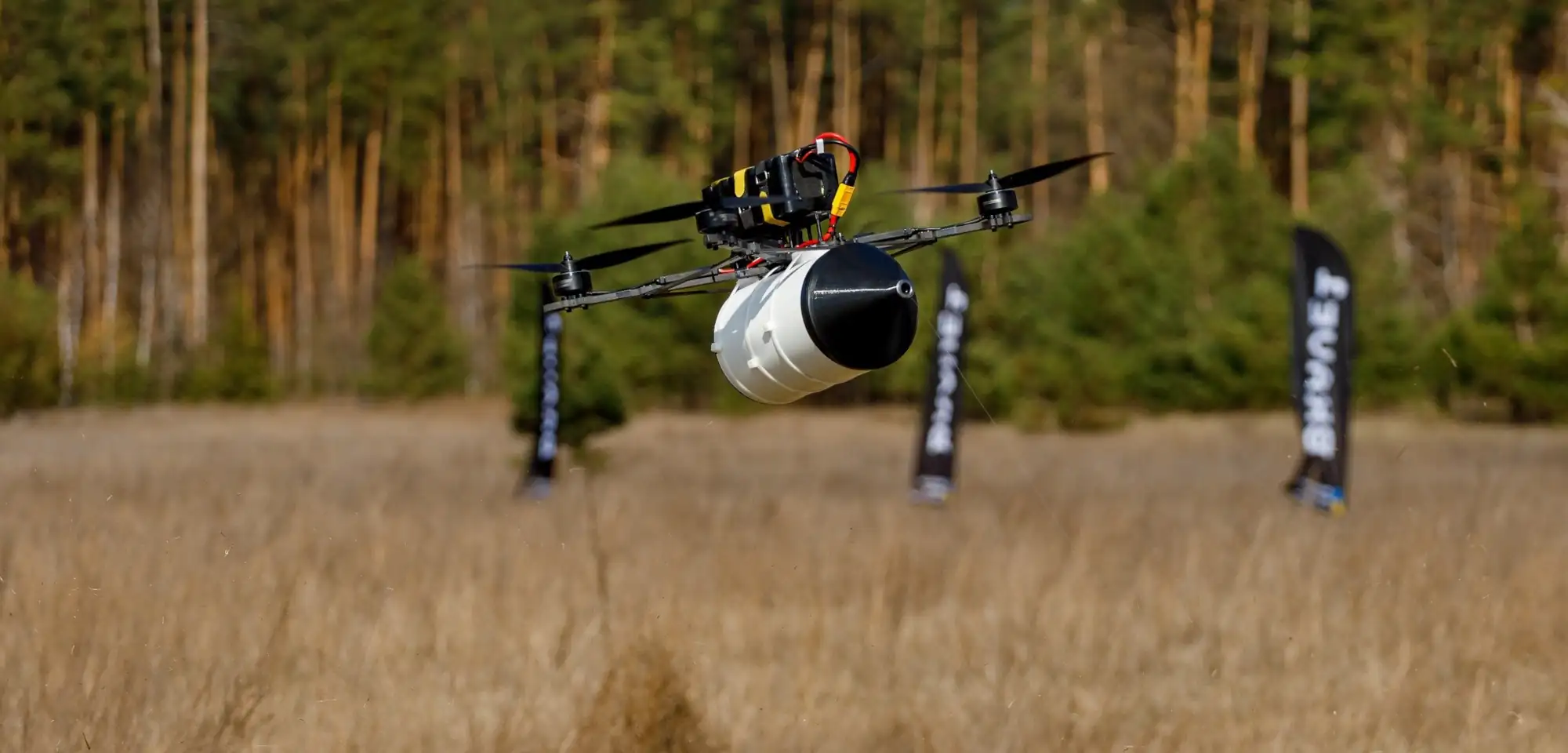
How fiber optic reels became the answer to EW challenges
Fiber optic reels became the answer to a systemic wartime problem — loss of control under intensive electronic warfare. Since 2022, Ukrainian units have regularly faced situations where drones lost connection before reaching the target, and ground platforms were left completely “blind” due to radio channel jamming.
The search for an alternative led engineers and volunteers to test control via a physical cable — and it was fiber optics that provided the stability that was lacking. Despite initial difficulties, the technology proved effective and gradually evolved from an attempt to bypass obstacles to one of the key elements of the modern communications system.
The use of fiber optic reels started with local initiatives and later reached the level of full-scale combat operations. One of the first large-scale examples was Operation “Spider Web”, during which the protected transmission channel became a critical factor for success.
What is a fiber optic reel and how does it work
A fiber optic reel is a device that provides a physical connection between an unmanned platform (drone or UGV) and the operator using a thin fiber optic cable. Unlike traditional radio communication, which transmits signals through the air, a fiber optic reel transmits data through a protected physical channel, making it resistant to jamming, interception, and signal loss.
Main components of the reel:
- Optical cable — single-mode fiber, usually 1 to 30 km long, wound on a drum.
- Unwinding mechanism — allows the cable to feed freely as the drone or UGV moves.
- Optical modules — convert control, telemetry, and video signals into a format suitable for transmission via fiber.
- Connection interfaces — ensure compatibility with control systems, video equipment, and power supply.
How it works in practice:
- The reel is mounted on the drone or ground platform.
- During movement, the cable gradually unwinds, maintaining a constant connection with the operator’s station.
- Control, video, and telemetry signals are transmitted via the fiber in real time — no radio waves, no delays or losses.
Key advantages:
- EW resistance — the signal does not travel through the air, so it cannot be jammed or intercepted.
- Minimal latency — fiber optics provide nearly instant data transmission.
- High video quality — stable imagery without distortion even in difficult conditions.
- Security — the physical channel is hard to detect or breach.
Limitations:
- Cable length — limits the platform’s operating radius.
- Risk of breakage — especially in complex terrain or at high speed.
- Reel weight — requires balancing the platform, especially for small drones.
Fiber optic reels for drones have become critically important for missions in active EW zones, urban areas, and deep behind enemy lines. They allow full control over the platform where radio communication does not work at all.
Serial production in russia and Ukraine
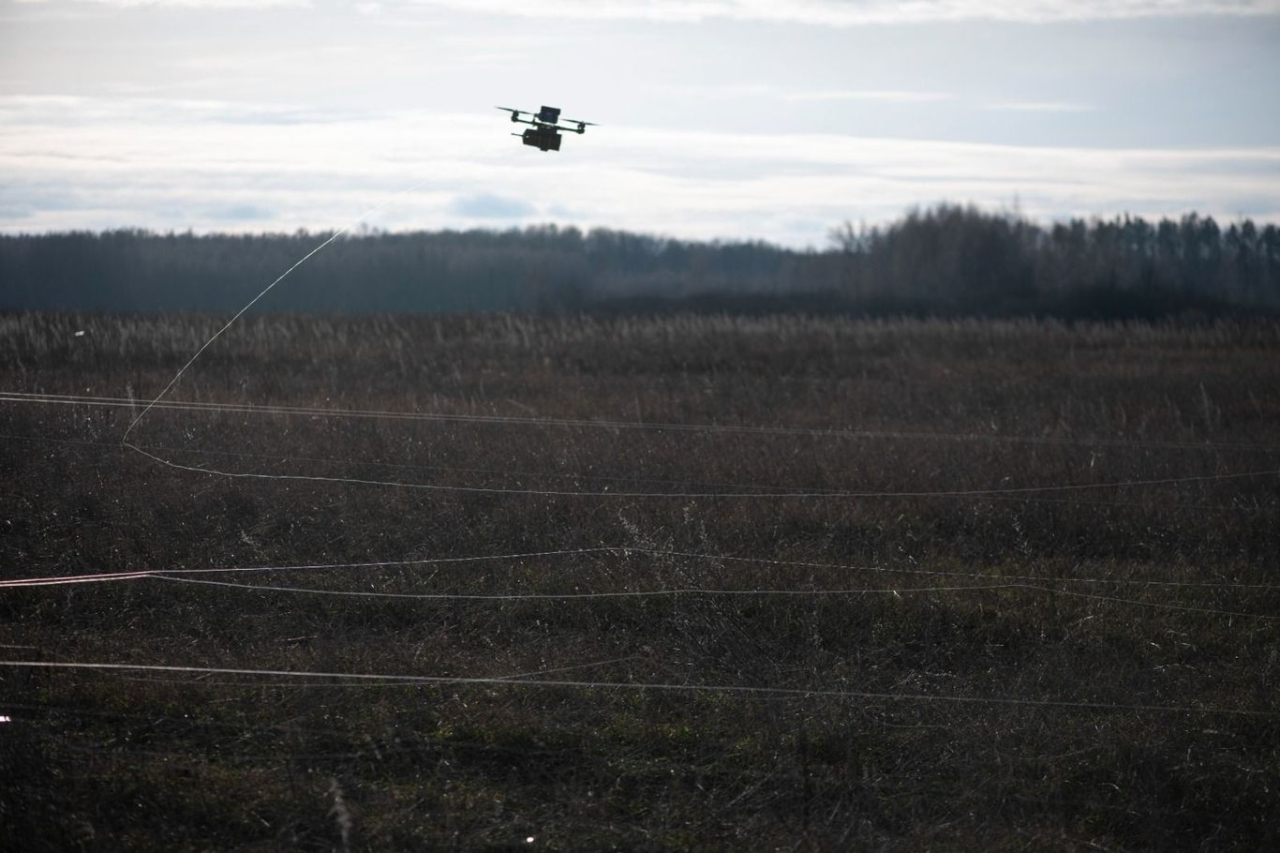 August 2024 marked the launch of serial production of FPV drones with fiber optic communication in russia. The “knyaz vandal novgorodsky” model transmitted video and telemetry up to 20 km, withstanding intense EW, and by the end of the year, it was already being delivered directly to tactical units.
In Ukraine, the first serial fiber optic reels appeared in spring 2025. In May 2025, 3DTech launched production of modules up to 30 km for FPV drones and UGVs. The lineup includes reels of 3, 10, 15, 20, and 30 km with weights from 1.1 to 2.8 kg and a casing protection level of IP56.
The lesson from these two cases is clear: DIY prototypes need scaling and resource support. While russia autonomously deployed a production line, Ukrainian developers are combining frontline volunteer experience, research labs, and defense enterprises to bring reels up to combat system standards.
Operation “Spider Web”: an invisible thread of light against the heavy shadow of russian strategic aviation
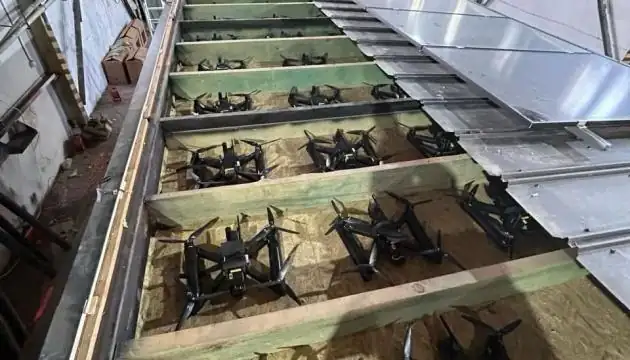 June 1, 2025, became the point of no return for russian strategic aviation. Explosions simultaneously thundered at five russian military airfields, destroying dozens of aircraft — including missile carriers that for years served as moscow’s nuclear blackmail. At the heart of this operation was not only courage and complex planning but also a thin yet powerful technology: fiber optics.
Fiber optic modules, reels, and transmitters became the true “nervous system” of the attack, allowing drones to coordinate strikes thousands of kilometers deep inside russia. This technology, unobtrusive and free of pomp, became the driver of an ideological advantage over the enemy.
According to preliminary estimates, trucks with mounted base stations — disguised as ordinary cargo vehicles — penetrated russian territory long before X-Day. The key element was the fiber optic modules, which allowed these stations to connect to civilian or semi-military infrastructure. Through these cables, information was transmitted with stealthy accuracy and stability, invisible to radio interception.
- Latency time — under 5 milliseconds. In combat, that’s the difference between a target hit and a target lost.
- Fiber optic channel capacity — dozens of times higher than traditional radio communication.
- Inability to jam or easily detect — an advantage that neutralizes traditional electronic warfare tools.
One of the most interesting aspects was the use of russian telecom infrastructure to organize control channels. This was not only technological sophistication but also strategic flexibility: fiber optic nodes were integrated into existing networks, often without noticeable interference or visible activity, enabling drone launches without direct intervention from Ukrainian territory.
117 FPV drones simultaneously lifted into the sky, striking airfields from the murmansk region to amur. The defining factor was not only the scale but the level of coordination. Each drone operated in precise sync with the others — command transmission, target response, and launch moments were calculated to the second. This made it possible to carry out a multi-target strike simultaneously at five locations.
Impact of the strike:
- 41 aircraft destroyed or damaged, including strategic Tu-95MS, Tu-22M3, A-50 aircraft, and possibly Tu-160s.
- According to estimates, up to 34% of russia’s strategic aviation was disabled.
- Estimated losses exceed $7 billion.
- But the greater loss is the loss of a sense of rear-area safety.
Looking ahead
Today, the fiber optic reel is not an experimental alternative but a combat standard. It is used where losing control is not an option: in fortification defense, in “gray zone” breakthroughs, in reconnaissance under jamming. But one question remains key — which reel can survive the field, rain, dust, breakage, and the way back?
For this reason, more and more teams turn to solutions built not from a catalog but from real experience. Among them are Ukrainian reels from BTRY.ENERGY. They cover a wide range of configurations: from 2 km to 20 km. Each model offers:
- minimal fiber bend radius — for maneuverability;
- reliable power supply and mounting;
- S-BUS / CRSF / Ethernet interfaces — compatible with most platforms.
This is not an improvised fix but a stable control channel that withstands field conditions. And when, in a real situation, you need the system to work from the very first second — you choose what has already been proven in practice.
News and Reviews


01/09/2026
Top News for the Morning of September 1, 2026. Russia is using tactics of attrition against Kyiv
BTRY.ENERGY offers news and articles in Ukrainian with a focus on preserving Ukrainian identity, citizens' rights, and t...
31/08/2026
Pentagon: Arsenal to be expanded
BTRY.ENERGY offers news and articles in Ukrainian with a focus on preserving Ukrainian identity, citizens' rights, and t...
31/08/2026
Three major American publications focus on Ukraine. Why does this matter?
BTRY.ENERGY offers news and articles in Ukrainian with a focus on preserving Ukrainian identity, citizens' rights, and t...
31/08/2026
Top News for the Morning of August 31, 2026. The world has finally entered a global conflict
BTRY.ENERGY offers news and articles in Ukrainian with a focus on preserving Ukrainian identity, citizens' rights, and t...
28/08/2026
A new nuclear technology: micro-reactors. Why is this important?
BTRY.ENERGY offers news and articles in Ukrainian with a focus on preserving Ukrainian identity, citizens' rights, and t...
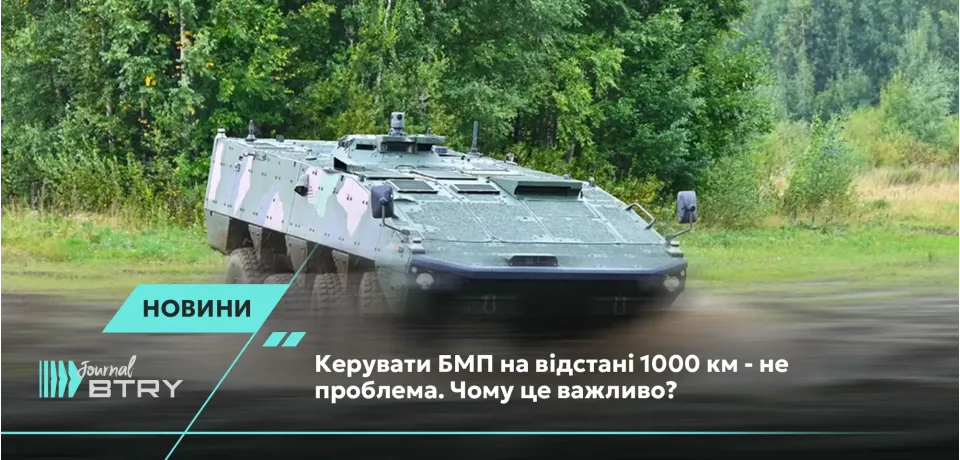
28/08/2026
Operating an infantry fighting vehicle (IFV) from a distance of 1,000 km is not a problem. Why is this important?
BTRY.ENERGY offers news and articles in Ukrainian with a focus on preserving Ukrainian identity, citizens' rights, and t...
Consultation
Need more information?
Would you like to learn more about BTRY.ENERGY or get a personal consultation - fill out the form and we will contact you


